

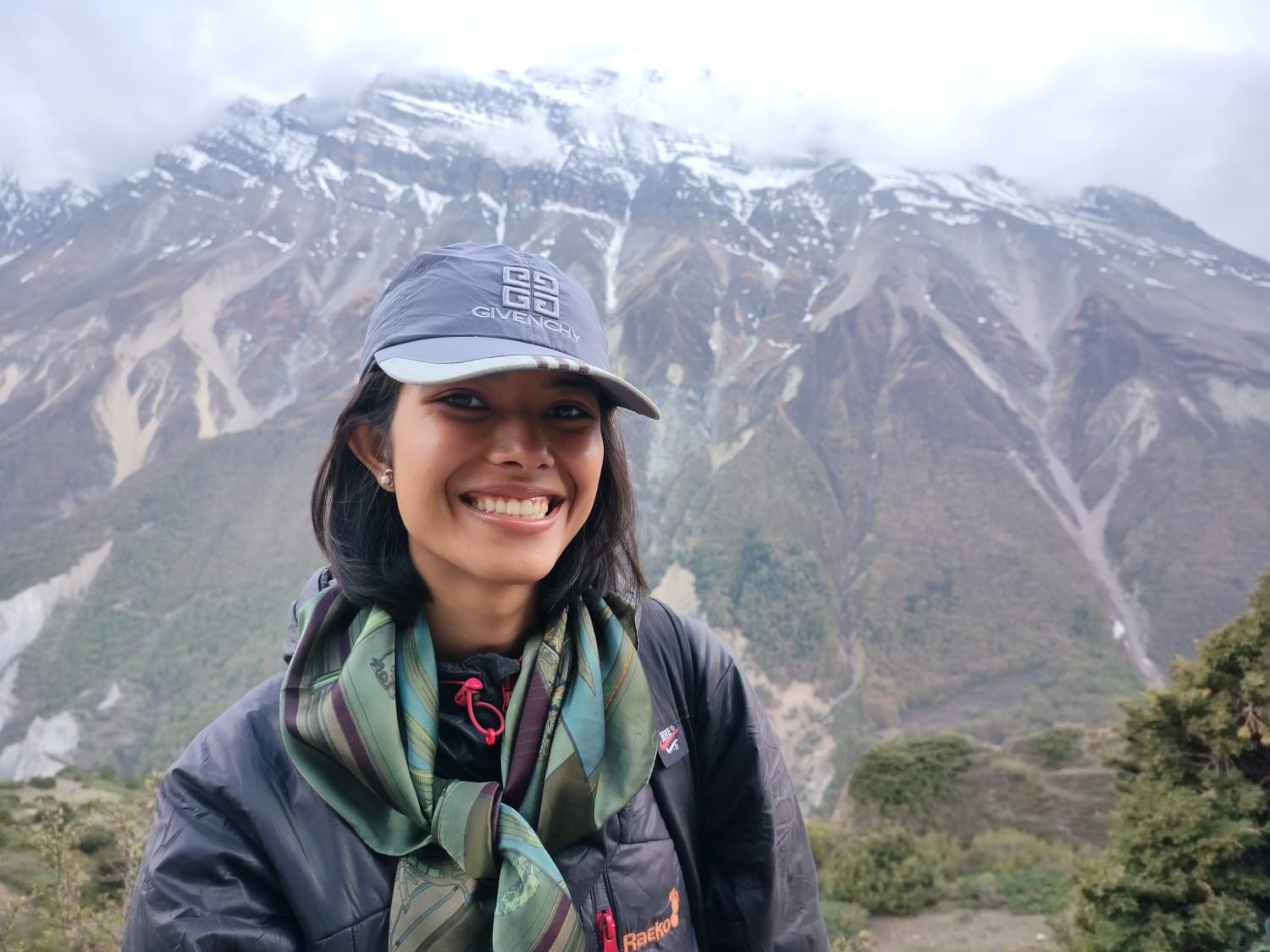
‘Intimidation’ might feel like the last word you’d expect me to use, but that’s just what I felt at my first glance at NCH.
It was a normal day. Just like any others. Browsing through my facebook, I saw a post related to NCH. It was shared by Bibek dai, with his hooky-ish sentences that immediately caught my attention.
I felt ‘intimidated’ when I used to see posts regularly from NCH in my Facebook and LinkedIn. Not the word one might expect haha, but true. It felt powerful and distant to me. It made me feel like it is something out of my league (trust me, you’ll stumble upon it somewhere in the middle of this blog). I began thinking about how it might feel to become a part.
Fast forward to a year later, when I saw the open call for volunteering at NCH, I was determined to take up the role of creative writer. And that’s what I did. Getting selected was just an expectation, I was even prepared for this to simply become an ‘experience’ of rejection, honestly.
But first let me introduce the person whose timeline led me straight towards NCH.
It was none other than our Bibek dai !! Back in the 2022 his feeds were filled with posts about activities and achievements that mirrored what an ideal LinkedIn would look like. On some random day, he was wise enough to share about everything related to NCH in a 1 hr call. And that’s when I got enthralled.
My story was never about a burning deep passion, specifically related to climate change that led me to join. It was the contrary. After I had joined, I became genuinely motivated to work with passion in this field.

I had always believed in accepting differences. Cause why not? Same is plain and difference is divine. I’m a keen learner. I believe in growing together as a team. And I found this here, at NCH. I guess that increased my respect even more for how it was being run. Diverse background of people joining a single organization to contribute whatever they have learned for building a solid climate community in Nepal. So where would I best learn all of this, if not here. This was what motivated me to become a part of NCH, to learn and grow. That’s exactly what I recieved.
I earned my bachelors in Agriculture from Kathmandu University. My field of study aligns with climate and environment. It’s where I realized that agriculture is impossible in extreme events led by Climate Change. This however, is not true for advanced countries like Israel, China and USA among others, but for a country like Nepal? We are beginning to adapt technology at an increasing pace just yet. So, to bring a big revolution in agriculture that would benefit the farmers and the nationals felt just like a dream.
I was becoming increasingly aware about uncertain extreme events of climate change, leading to destruction of crops. Flood and drought became common the last few years bringing serious loss in yield and productivity of crops, and hindering the livelihood of farmers.
Climate related topics had not been my priority, however I was unconsciously feeding the news about it regularly, which brought me awareness to some extent. While doing my bachelors in Panchkhal, I began hearing about the cancerous incidences prevalent over there for a long time. For women, it got even harsher. The cause? Excessive use of agro-chemicals and a lack of precautionary steps (prior and after) for using those chemicals. I used to hear loud and bold statements from people in Panchkhal, "Every household had at least a single cancer patient in here". Nevertheless, there are not sufficient statistical records in papers to back up this statement.
But primarily, what pushed me to think about climate in agriculture was none other than the topic of ‘Food System of the Nepali Household’. In the past, our older generations were rarely deprived of nutrition, because they were not solely dependent on rice, as we presently are. It’s भात every day and night for us (let’s not forget ‘bhuteko bhat’ for lunch, that’s common in many households). If anyone were to ask me to define the value of rice in my life, I’d say that a day without rice feels oddly incomplete. Let me share an experience of an irony from my side. Prior to joining agriculture, I did not have the knowledge expected from someone willing to join agriculture. I didn’t know phaphar, kodo, junelo, kurilo, latte. Simply because they were never a part of my diet and I never bothered to research about them by myself.

We learnt about something called superior foods, aka Neglected and Underutilized Species (NUS), which was an eye opener. They had been under valued for long but the research showed otherwise. The crops like buckwheat, sorghum, millet, quinoa, and several others were the nutrition rich crops of Nepal. What’s more surprising is they’re perfect to survive harsh climate conditions and aid in rejuvenating soil. They’re not only nutritious but surprisingly a boon to the soil where it’s grown. Needed minimal inputs and care, were hardy enough to resist and grow against extreme conditions.
This was my subtle inclination towards climate change. My curiosity was sparked by concern for the existing and potential threat of climate change to plant health.
Returning back to my earlier statement (why I felt NCH to be out of my league), it was the individuals, their background stories, and their climate-related accomplishments in Nepal, all explained in the 'Climate champions' section of the NCH website. The lengthy paragraphs on the NCH website's profile and work sections intimidated me at first, but as I began to read the pieces line by line, they gradually drew me in.
My initial thought upon reading about the board members in the "about" section was, "Wow, they are impressive."
Choosing NCH wasn’t just about learning, it was also about belonging and becoming. I’ve loved giving my absolute best to this team. Pouring whatever I have learnt, alongside sharpening it. I aim to make it more of a cycle- I learn something new (from the most amazing team members!), and give it back so it actually matters.
Somewhere in this journey, I started realizing I’m capable of going deeper. Asking harder questions, exploring further, and truly contributing to the climate space instead of observing silently from the sidelines. NCH doesn't just teach me things, it equally makes me see my own potential a little more clearly.
Being a part of the team at NCH has reshaped my perspectives on teamwork. After a long time, it felt like a breath of fresh air. I was finally in a place where I had the freedom to choose my own path, and at the same time focus on what I genuinely care about. I learned that having mutual respect for the work and the team helps us stay committed and it feels all natural. It was a sharp veer from the ‘mandatory enthusiasm’ I often have to perform in the corporate world. I am glad for the curiosity that pushed me to take this leap, now I’m officially a part of this cozy team, and ready to finally BEGIN my journey in the climate space.
I’m speaking from personal experience when I say that we should try new things and explore, and avoid leaving even a tiny space where we might regret not trying them. Personally, I've always struggled with decision-making as I love to experiment with diverse fields before settling on and selecting my ideal line of an “occupation”. It occurs, and it's perfectly OK. It’s okay to simply move forward with our instincts.

