

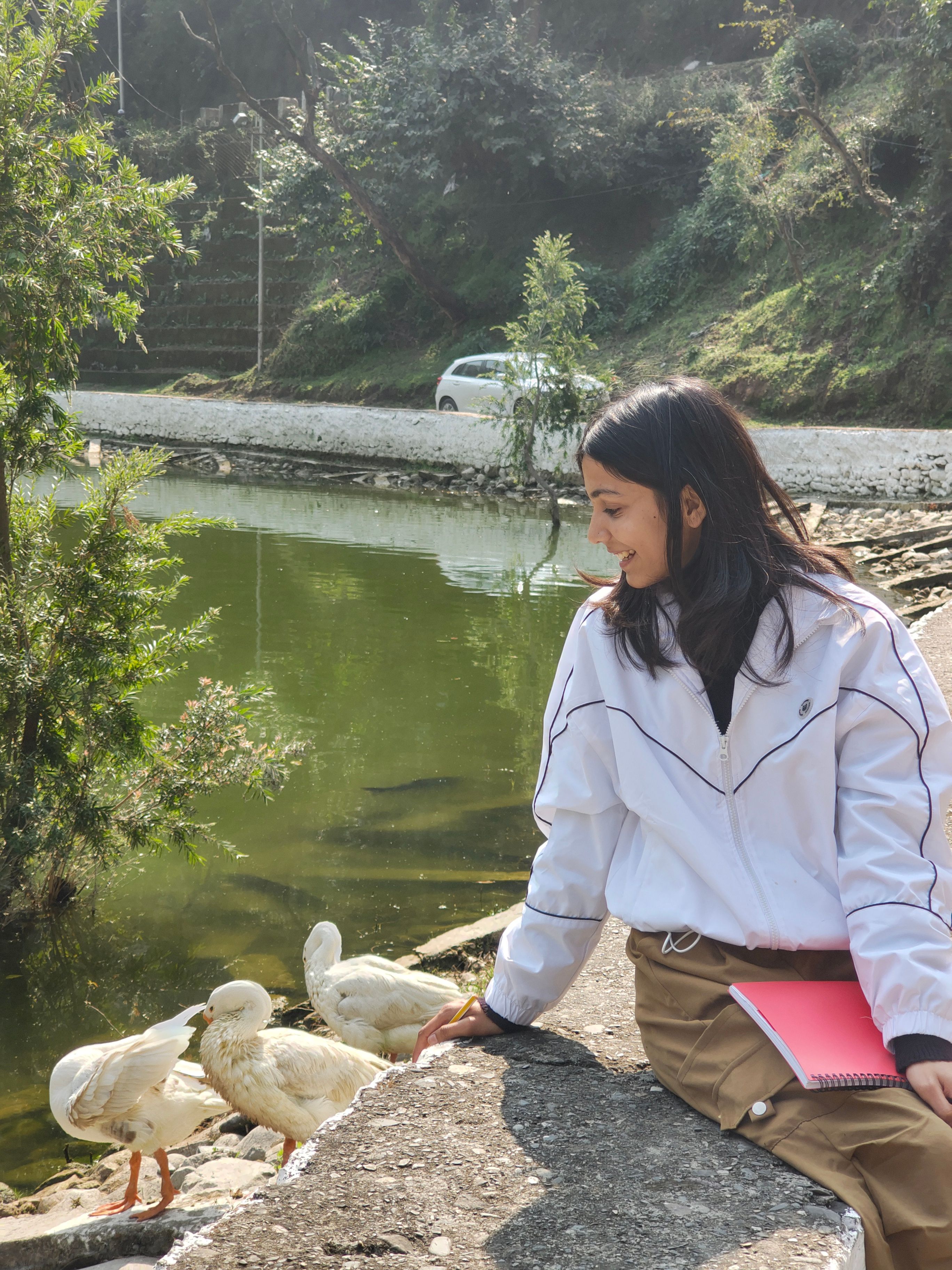
“ Kafal Pako Chaita Meri Chaila” (Kafal ripens in the month of Chaitra, oh my girl) is a popular folk song amongst kids of Uttarakhand that signifies the onset of springtime along with all of nature’s reawakening. This is a very important time because the forests have historically been the lifeblood for all who inhabit these mountain ranges. However, kafal no longer ripens in the month of Chaitra.
An elderly farmer once said to me, “Kafal now grows in January; it didn't grow until at least after March.” His knowledge does not arise from reading books or conducting studies; rather, it stems from a long history of experience, and this history contained a learning curve for everyone who knew about it: kafal trees will no longer produce ripe fruit simultaneously like they usually do. And indeed, the elderly farmer was right; evidence has emerged from recent studies to substantiate his statement.
The Tree Calendar Has Died
Kafal is more than just a food source, it is also a powerful indicator of springtime and the renewal of nature’s cycle. The kafal (Myrica esculenta) typically flowers and produces fruit in a repeating annual pattern, with the harvest occurring around the end of the monsoon in either April or May each year. As a result of the kafal's seasonal cycle, locals created stories surrounding the berry and its relationship with food and tradition; however, the local seasonal cycle and its associated traditions are breaking down.

Research by botanists and Uttarakhand's Forestry Department shows that at some locations the timing of flowering and fruiting events occurs three to four months earlier than the historical norms. Flowering specimens have been observed in December and January, a time of year when the hills should still be wrapped in winter stillness. Early blooming disrupts the biological clock of plants, which further creates problems in the quantity and quality of food grown by many local communities from which they derive their income. Kafal is not the only fruit that has flowered too early.

Buransh, the state tree of Uttarakhand (its scientific name is Rhododendron arboreum), has begun to bloom months in advance. I’ve witnessed this during my walks through tree-lined areas that would have once looked white with winter snow cover, but instead now I see the Buransh already starting to bloom. Many of the trees within the forests of the Himalaya are blooming many months too early as well and the climatic markers of the seasons in this region for over 1,000 years have been completely altered due to climate change.
This is not only an issue of forestry and ecology, but also an issue of culture. The long-standing relationship between the people of the mountains and their forests is beginning to fracture.
This unraveling isn't limited to trees. Nepal marks National Paddy Day on Asar 15 (June 29), a date meant to align with the monsoon's arrival for rice transplanting. But farmers in eastern Nepal now describe rainfall that no longer keeps that appointment arriving too early some years and too late in others, cutting into harvests either way. In Dhankuta, communities report that local springs, once reliable enough to support fishing, are drying up or slowing to a trickle, forcing a shift toward rainwater harvesting and less water-intensive crops. The same climatic instability that is confusing kafal and Buransh is unsettling the monsoon calendar that Himalayan farming has depended on for generations.
What Is the Forest Actually Holding?
The Himalayan forests provide us with evidence that they contain large amounts of carbon just by looking at the phenological changes, i.e., the flowering times. The change in flowering time is indicative of much larger problems that stem from what the forests are holding and what we will lose by not protecting them.
When a tree takes in carbon dioxide (CO2) through photosynthesis, the carbon is converted into trunk, branches, roots, and leaves. The total amount of carbon that a forest is holding is referred to as above-ground biomass (AGB) which represents the amount of carbon the forest has stored.
The Himalayan forests are estimated to sequester billions of tonnes of carbon. Carbon. Carbon storage in the Hindu Kush Himalaya regions has been estimated at several billion tonnes of CO2. Sal (Shorea robusta) forests that grow along the Shivalik foothills of the Himalayas, Oak (Quercus robur) and Rhododendron (Rhododendron spp) forests in the eastern Mid-Himalayas, and sub-alpine forests that grow above the tree line are the region’s carbon stock.
More About Why the Himalayas Have Importance Beyond Just Being a Northern Border
In addition to being the northern border of South Asia, the Himalayas are also responsible for controlling monsoons in South Asia, providing rivers with their waters, and supporting biodiversity throughout the area. With the onset of climate change, they will now become a battleground in the climate crisis.
The forests then face the following threefold threat simultaneously. The removal of forest cover to develop agriculture, expand road networks, and provide firewood has reduced the carbon stores within the mountains. Climate change is also pushing tree species to shift to significantly higher elevations than before, making the same species more vulnerable as they struggle to establish themselves at these new altitudes. In addition to these, drought-affected forests will have less carbon stored than they did, but they are also starting to release back into the atmosphere the carbon that they had been holding and have therefore transitioned from a carbon sink into a carbon source. Very few people are aware of this point.
Nature-Based Solutions: Letting Forests Do the Work
These forests remain our best chance to continue to mitigate climate change moving forward. Protection and restoration of these forests will allow the development of most effective climate change mitigation solutions. In practice this solution is referred to as "Nature-based Solutions (NbS)".
Carbon capture technologies are expensive and are not the only method for removing carbon dioxide from the atmosphere. The atmosphere is also cleaned of carbon dioxide through the processes of a healthy forest. In addition to removing carbon dioxide from the atmosphere, a healthy forest in the Himalayas will hold soil together, recharge groundwater, maintain local climate conditions, provide habitat for biodiversity, and perform all of these processes simultaneously. The Ecosystem Co-Benefits refer to the services provided by the Healthy Forests, including; clean drinking water, climate regulation (carbon sequestration), biodiversity, and cultural / recreational opportunities to the communities that live in the area of those forests.
International agreements such as REDD+ which stands for Reducing Emissions from Deforestation and Forest Degradation is a UN framework responding to Climate Change created through the United Nations Framework Convention on Climate Change (UNFCCC) (UNFCCC, 2026).
The objective of REDD+ is to provide financial incentives to developing countries for reducing deforestation and forest degradation emissions (e.g., implementation of sustainable forest management practices and/or through the conservation and enhancement of forest carbon stocks). In other words, REDD+ establishes a value for carbon stored in forests so that countries and communities have an economic reason to leave forests growing rather than harvesting them to realize short-term gains (UNFCCC, 2026a; UN-REDD, 2024).
India has committed to the REDD+ under the UNFCCC framework and has set out the goal of growing its forested area so that it can meet its targets for climate change (ICIMOD, 2020; TERI, 2018). However, India is not acting alone, as its neighbors in the Himalayas have also pledged to conserve these mountain forests because they are part of a joint regional heritage and play an important role in supporting South Asia’s climate. In Nepal, for example, more than 1.65 million hectares (approximately 4 million acres) of forest have been turned over to user groups (community forestry) for sustainable management (Rising Nepal Daily, 2023). These groups have developed healthy, vigorous stands of trees within the nation over the last thirty years through their management and use of forests. Bhutan is unique among countries, in that it is the only carbon-negative country in the world, and through its constitution it must maintain a minimum of 60% of its area as forested at all times (UNDP, 2018). However, simply having policies in support of forest conservation is not enough; policies must be backed by community involvement and consistently enforced.
Those Familiar with the Forest
The farmer I spoke with about kafal wasn't using scientific terms; he was speaking from his life experience. He has witnessed this same hillside, trees, and change of seasons through many decades of his life. His wisdom is not only anecdotal but actually based upon his lived experiences and those of his ancestors.
Himalayan forests are not just wilderness, they are landscapes where people live, within and alongside them. Van Panchayats (Village Forest Councils), along with Joint Forest Management Committees, have been managing these forests for many decades, and in many cases, they have done so more effectively than government agencies. The indigenous peoples' traditional knowledge regarding the timing of seasons, sustainable harvesting techniques, and forestry fire management, have proven successful in maintaining forest health and biodiversity over generations, and have therefore survived.
If we are serious about protecting these forests from becoming carbon sources rather than remaining "carbon sinks", we need to commit to investing in the human resources that are adjacent to these forest systems. They must be afforded access to carbon finance benefits, recognition of their forest rights and treated as partners, not just problems to be resolved.
What Is Needed
Kafal season has changed and Buransh is blooming in winter, the ice glaciers are receding, and the treeline is also moving higher up. These developments are not just some numbers on a piece of paper, they represent the lives of millions living throughout the Himalayas, and they are a clear indication that the forests are beginning to suffer stress related to the role they play in holding up our climate.
What we really need is stronger protection against deforestation, an increase in community-based forest management, access to forest carbon credits linked to climate initiatives, and better monitoring of forests using satellite imagery (remote sensing) and LiDar technology.
But, more than anything else, we must listen … to the data (which we must do), to farmers and to forest communities … and to these communities still singing songs about (kafal) fruit that no longer ripens as it should.
However, as my friends told me, today, it does not … and therefore, we all must be worried about this change.
References
ICIMOD. (2020). Afforestation and REDD+ in India. International Centre for Integrated Mountain Development. https://www.icimod.org/event/afforestation-and-redd-in-india/
Rising Nepal Daily. (2023, May 30). Community forestry shows sound results. https://risingnepaldaily.com/news/27448
TERI. (2018, October). India unveils its national strategy to increase forest cover in line with Paris Agreement. TERI Green. https://terragreen.teriin.org
UNDP. (2018, October 11). What tiny Bhutan can teach the world about being carbon negative. United Nations Development Programme. https://www.undp.org/bhutan/news/what-tiny-bhutan-can-teach-world-about-being-carbon-negative
UNFCCC. (2026). REDD+ Web Platform. United Nations Framework Convention on Climate Change. https://redd.unfccc.int
UN-REDD. (2024, September 3). What is REDD+. UN-REDD Programme. https://www.un-redd.org