

The “ IPCC’s Sixth Assessment Report” 2023 report warns scientists and policymakers alike that the world is running out of time. Without deep, rapid, and sustained cuts in global greenhouse gas emissions, global warming is expected to exceed the 1.5°C and even the 2°C thresholds this century. Although the global target is to keep warming “well below” 2°C, current trends show that the world is heading toward dangerous temperature levels that will intensify extreme weather, threaten food security, and place vulnerable countries like Nepal at even greater risk (IPCC, 2023).
In Nepal, climate change is not just a scientific discussion it is something people see and feel every day. Hotter summers, irregular rainfall, drying soil, and weaker crops have become common experiences. Farmers, who contribute the least to global emissions, are suffering the most from its impacts. This makes climate solutions urgent and necessary for Nepal’s future.
Nepal’s Farming Challenges
Agriculture is the main livelihood for many Nepali families, especially in rural and remote areas. Over the years, farmers have become dependent on chemical fertilizers to maintain crop production. This dependency has slowly damaged the soil. Farmers notice that the soil has become hard, less fertile, and unable to hold water. Because of this, they use more chemicals every year, which increases their cost and reduces long-term soil health (MoALD,2022). This cycle is difficult for small farmers who already face financial challenges and have limited access to training or resources.
Biochar: A Simple and Affordable Answer
Why Biochar Fits Nepal
Biochar is a carbon-rich material made by heating crop waste or forest waste in low oxygen. When mixed with soil, it improves soil structure, helps the soil hold water, and increases nutrients. It also stores carbon for a very long time, making it a natural climate solution. Biochar is cheap to make and uses materials that farmers already have, such as rice husk, maize stalks, or forest dry matter. This makes it a practical and useful solution for Nepal’s rural communities (Vista and Pandit, 2023). Biochar supports both climate action and farmer livelihoods. It improves soil health, reduces the need for chemical fertilizers, and helps crops grow stronger even during dry periods.
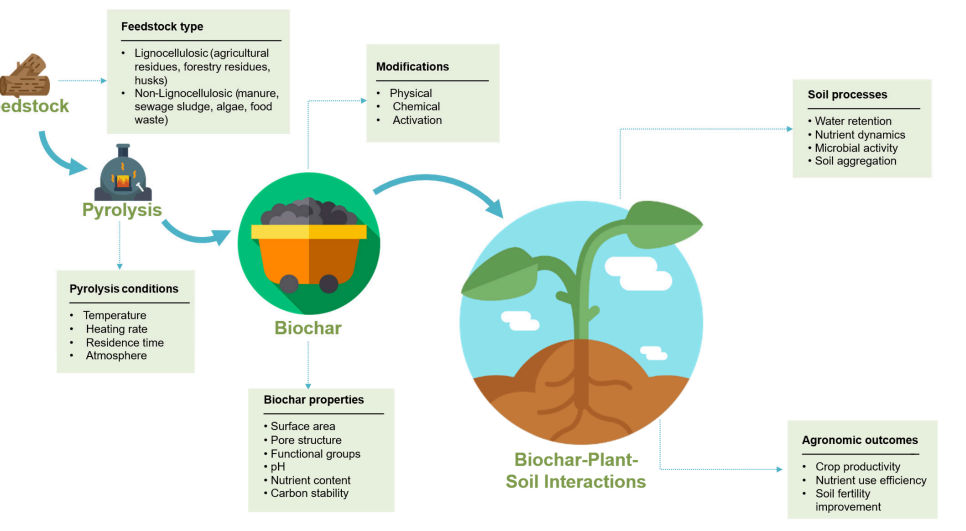
Figure1. showing how biochar works and their effects on soil
source: adapted from (Correia, 2026)
Case study: Rasuwa - Biochar Improving Crop Yield
Biochar has shown very positive results in many parts of Nepal, and one of the best examples comes from a long-term study in Rasuwa District. Farmers in this area often struggle with acidic soil that cannot hold enough water or nutrients. To see if biochar could help, researchers applied different amounts of biochar to maize and mustard fields and observed the results over three years.
In the first year, the crops did not show much improvement. This is normal because biochar needs time to mix with the soil and start improving its structure. By the second year, the crops started growing stronger and healthier. The soil became less acidic and held more nutrients. Farmers noticed greener leaves, stronger stems, and better grain formation. In the third year, the improvement was clear. Maize yields increased almost double, and mustard yields increased even more. The soil stayed moist longer, and plants grew more evenly across the field. The study found that using around 15 tonnes of biochar per hectare gave farmers the best balance between cost and benefit of biochar application (Pandit et al., 2018). This amount improved the soil and increased crop yield without becoming too expensive or difficult to produce. This Rasuwa case study shows that biochar is not just a scientific idea, it is a practical and farmer‑friendly solution. With time, biochar helps improve soil health, boosts crop production, and supports climate resilience in Nepal’s hill farming communities.
What Nepal Can Do Next
Simple Steps Forward
Nepal can train farmers to make biochar using local materials. Small pyrolysis machines can be introduced in villages to make production easier and safer. The government can include biochar in soil improvement and climate adaptation programs. Nepal can also explore carbon markets because biochar is recognised globally as a carbon removal method. Colleges, universities, NGOs, and youth groups can research better ways to use biochar in different regions of Nepal and help spread awareness.
Conclusion
Biochar is simple, affordable, and effective. It improves soil, supports farmers, and helps fight climate change. For Nepal, biochar is not just a technology it is a hope for healthier soil, stronger crops, and a climate‑resilient future. As climate pressures increase, biochar stands out as a practical solution that can empower farmers and protect the environment at the same time. Biochar also opens new opportunities for Nepal. With proper training, community‑level production, and support from government and local institutions, biochar can become part of national climate adaptation plans. It can help rural families build long‑term resilience, create green jobs, and even connect Nepal to global carbon markets. Most importantly, biochar empowers farmers giving them a simple, local, and sustainable way to restore their soil and secure their harvests in a changing climate
References
Correia, Á. C. (2026). Biochar and Sustainable Crop Performance: A Synoptical Review of Its Properties, Agronomic Potential and Constraints. Sci.
IPCC (2023) Climate Change 2023 Synthesis Report, Contribution of Working Groups I, II and III to the Sixth Assessment Report of the Intergovernmental Panel on Climate Change.
Of, I. and Agriculture, M. (2013) ‘Statistical Information on on’, 2013.
Pandit, N.R. et al. (2018) ‘Multi-year double cropping biochar field trials in Nepal: Finding the optimal biochar dose through agronomic trials and cost-benefit analysis’, Science of the Total Environment, 637–638, pp. 1333–1341. Available at: https://doi.org/10.1016/j.scitotenv.2018.05.107.
Vista, S.P. and Pandit, N.R. (2023) ‘Biochar for Improving crop Production in Nepal’, SAARC Journal of Agriculture, 21(1), pp. 227–238. Available at: https://doi.org/10.3329/sja.v21i1.65258.