


Water is a paramount source of existence of any life on Earth. From drinking and farming to construction or running an industry, everything demands water. Water nurtures life, yet today we are known to have reached an era of "global bankruptcy of water” according to UN scientists, and experts are not just talking about a shortfall or temporary predicament but straight up depletion that is beyond repair (Anderson, 2026).
We have rapidly advanced towards a world of Artificial Intelligence (AI) and it is swiftly taking over most aspects of our life. Today’s industries, organizations, and businesses heavily rely on it. Life is easier in various fields such as healthcare, education, agriculture, industry and many more owing to AI. AI has become robust, and with its spreading roots, environmental health is deteriorating, now more than ever. The advancement of AI comes with a heavy cost on the environment and its scarce resources.
It has been estimated that a single AI service receives 2.5 million prompts per day, which leads to consumption of 100s of gigawatt-hours electricity annually. It’s even massive for image and video generation as compared to text generation (UN News, 2026). It was discovered that writing nearly a 100 word email requires 519 ml of water (Verma & Tan, 2024).
Whenever we give a prompt to ChatGPT or any other AI tools to summarize or ask any question, vast amounts of water is used. But why would an AI tool require water? And why is this scarce water depleting because of a boost in AI?

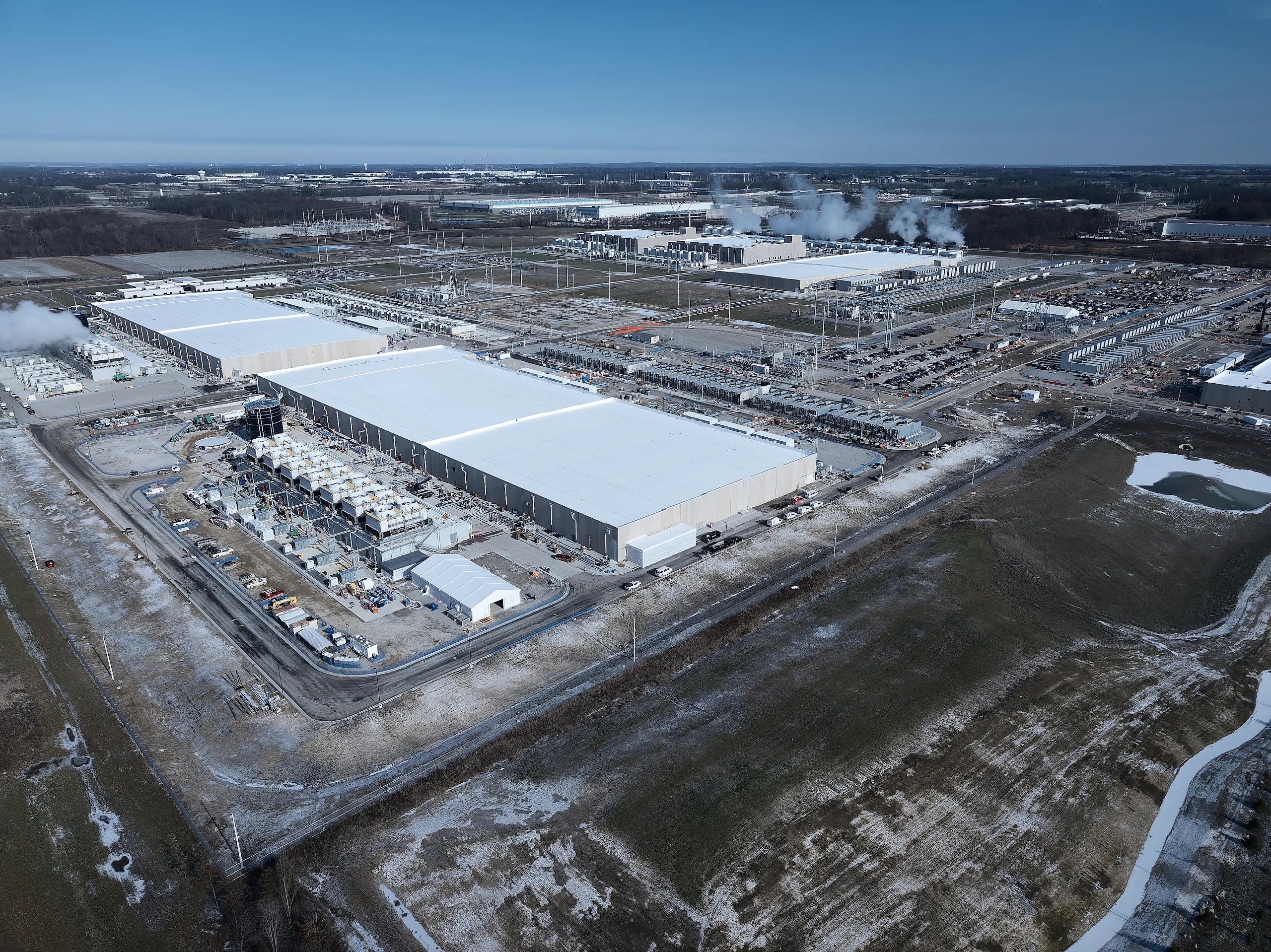
Behind every AI model and cloud computing lay the data centers that support high performance computing. According to Zaveri (2026), the data centers that power AI could consume 945 terawatt-hours of electricity annually by 2030, an amount used by Japan per annum. These servers use water indirectly through electricity consumption as well.
As already established, AI operations backed with data centers require tremendous quantities of water. With the craze of flourishing AI and technology, the cost will be irreparable, which will lead to something that could heighten the existing state of crisis and increase vulnerability among communities that are impacted the most. The increasing global warming is already an existential threat, as the increasing temperature needs more water to cool down servers and the building. The amount of water used in a data center depends on the technology, location, climate and design used.
This issue is not just limited to water consumption, the problem lies deeper. According to Tozzi (2025), the water used by data centers is leading to water pollution due to leaching of biocide chemicals like chlorine dioxide or bromine. These are added in the water to prevent growth of algae, bacteria and mold. Additionally, the heavy metals can seep into the water through the systems built for cooling. Another factor is the corrosion inhibitors added to water for preventing corrosion within cooling systems. The water used by a single data center can reach up to 5 million gallons per day, which equals the amount of water utilized by more than 15,000 houses daily. This gives us an insight into the scale of chemical contamination released from the treated water into the water bodies nearby and the long term effect from it.
The aquifers are getting drained. The carbon footprint of AI is increasing. As of today, we should not just be concerned with AI taking up our jobs, but also AI drying up our PLANET. We should be apprehensive about how these incidents could potentially lead to unimaginable sorrows if not curbed appropriately and on time.
Our solutions!
The countries and regions where water is already scarce suffer more when the remaining water is utilized for data centers when instead it should’ve been utilized for sufficing basic human needs. We are being warned with studies and research stating the facts of the current situation and future predicament. The past warnings have been ignored time and again which has led to irreparable damage, but we still have a small strand of hope to protect some of the remaining water resources before they are once again sucked dry just like the others.
If water is used for cooling purposes, it can be treated before it is discharged to prevent polluting the streams where it is released directly after usage. According to Barnuevo (2025), water resources can be utilized in an efficient way with the following methods:
Closed loop cooling systems (which means reusing recycled wastewater and freshwater) is an intensive cooling method which can help reduce freshwater consumption by up to 70%
Immersion cooling (servers, chips and other parts are immersed in a non-conductive (synthetic) fluid) method is costly but it significantly helps data centers save energy and utilize space
Air cooling (removes heat generated by chips through air conditioning vents and tubes), which serves as an effective method in areas with cheaper electricity and limited water resources
Free cooling (draws cold air from outside to inside for cooling down internal surroundings) is most effective for data centers which are located in cold environments.
These methods can be used as an alternative to increase water use efficiency of data centers. It’s a primary responsibility of the tech developers to optimize water usage sustainably. As users of AI, we ourselves need to be responsible in utilizing it only when necessary, not depending on it with our life itself. The developers and users need to be responsible to prevent future consequences that will get reflected upon exploiting natural resources in the name of advancement.
As we continue to embrace AI, I ask us all to reflect. Are we capable enough to survive in the long term without Artificial Intelligence for every little inconvenience?
References
AI’s environmental costs threaten water, land and climate. (2026, June 4). UN News. https://news.un.org/en/story/2026/06/1167658
Anderson, S. (2026, January 28). Health policy watch. Health Policy Watch. https://healthpolicy-watch.news/world-enters-new-era-of-water-crisis-un-says/
Data centers and water consumption. (2025, June 25). EESI. https://www.eesi.org/articles/view/data-centers-and-water-consumption
Tozzi, C. (2025, November 11). 4 strategies for eliminating data center water pollution. DataCenterKnowledge. https://www.datacenterknowledge.com/sustainability/4-strategies-for-eliminating-data-center-water-pollution
Verma, P., & Tan, S. (2024, September 18). A bottle of water per email: The hidden environmental costs of using AI chatbots. The Washington Post. https://www.washingtonpost.com/technology/2024/09/18/energy-ai-use-electricity-water-data-centers/
What is data center water cooling? (n.d.). Sunbird DCIM. https://www.sunbirddcim.com/glossary/data-center-water-cooling
Zaveri, E., Damania, R., & Jha, S. K. (2026, January 12). Managing AI-related water use sustainably. World Bank Blogs.
https://blogs.worldbank.org/en/water/when-the-cloud-meets-a-thirsty-world
Reidy, E. (2025, August 8). How liquid cooling is transforming data center construction. EIDA. https://www.eidasolutions.com/how-liquid-cooling-is-transforming-data-center-construction/