


Imagine going to the market one day and finding that some of the foods you normally buy are hard to find. Others cost twice as much as they did before. You ask why, and the answer turns out to be something as small as a bee.
It sounds unlikely, but it is closer to reality than most of us realize. Most people see bees as background noise on a warm afternoon, and some of us are simply trying not to get stung. Yet these small insects do far more for us than we give them credit for.
What Bees Actually Do for Our Food
When a bee moves from flower to flower, it carries pollen. This process, called pollination, is how many plants produce fruit and seeds. Wind handles some of this, but animals handle much more, and bees are the most dedicated pollinators.
The Intergovernmental Science-Policy Platform on Biodiversity and Ecosystem Services (IPBES) found that more than three-quarters of the world’s leading food crop types depend at least partly on animal pollination for their yield or quality (Potts et al., 2016). Crops that depend on pollinators make up about 35% of global crop production by volume (Klein et al., 2007), and their value runs to hundreds of billions of dollars a year.
Pollinators such as bees benefit apples, mangoes, almonds, pumpkins, cucumbers, coffee, mustard, and many more. Cereal crops such as rice, wheat, and barley are mainly self-pollinated, but a large share of the fruits, vegetables, nuts, seeds, and oilseeds that make meals nutritious and colorful depend on pollinators. These foods are also major sources of vitamins and minerals, such as vitamin A, vitamin C, and folate. In other words, bees are not just helping nature; they are helping our diets stay varied and nutritious.
Not All Bees Live in Hives
When we say “bee”, most of us picture a honeybee. According to the U.S. Geological Survey (2025), there are more than 20,000 known species of bees in the world, and most of them neither live in colonies nor make honey. Many are solitary, nesting in soil, hollow stems, or dead wood.
Bumblebees can do something honeybees cannot: they “buzz pollinate”, gripping a flower and vibrating their flight muscles to shake the pollen loose (De Luca and Vallejo-Marín, 2013). Tomatoes, peppers, and eggplants release their pollen best this way, so without bumblebees and other wild bees, these crops would struggle.
Honeybees, meanwhile, are the workhorses of commercial agriculture, and farmers in many countries rent hives the way they might rent a tractor. Almond orchards show how heavily modern farming depends on them. Every February, roughly two million honeybee colonies, most of the commercial hives in the United States, are trucked to California’s Central Valley, which grows the vast majority of the world’s almonds. The orchards bloom for only about three weeks and offer bees little to eat for the rest of the year, and exposure to pesticides and fungicides adds to the stress.
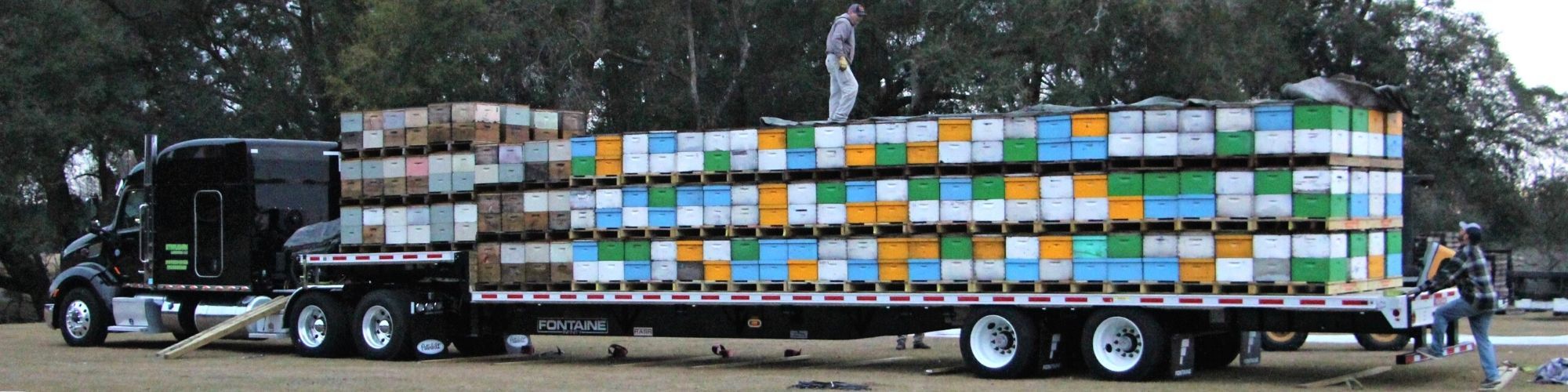
The risks of this system became clear recently. A nationwide survey run by Project Apis m., with the American Beekeeping Federation and the American Honey Producers Association, collected reports from 842 U.S. beekeepers who together manage an estimated 72% of the nation’s colonies. Between June 2024 and March 2025, commercial operations (more than 500 colonies) reported an average loss of 62% of their colonies, while hobbyists (1–49 colonies) reported an average loss of 51%. The survey’s organizers described the losses as the largest ever recorded in the United States (Honey Bee Health Coalition, 2025). These figures are self-reported by beekeepers, but they show how fragile the system can be.
Regional species matter too. In the Himalayan foothills, the giant Himalayan honeybee builds enormous single-comb nests that hang from cliffs, pollinates mountain plants, and is at the heart of one of the oldest honey-hunting traditions in the world.
Why Bee Populations Are Struggling
If bees are so important, why do we keep hearing about their decline? Researchers point to several pressures that often work together.
Habitat loss is one of the biggest, as meadows, hedgerows, and wild corners give way to farmland, roads, and cities, leaving fewer flowers to feed on and fewer places to nest. Pesticides add to the strain, since some insecticides harm bees directly while others weaken their ability to navigate, feed, or reproduce. In 2013, the European Food and Safety Authority (EFSA) declared neonicotinoids to be an unacceptably high risk to wild and honey bees (EFSA, 2018). Concern backed up by extensive data collection, led the European Union to ban their outdoor use in 2018.
Climate change can make plants bloom before bees are active, or after, and when flowers and bees fall out of step, both lose. Disease and parasites matter too, especially the Varroa mite, a tiny parasite that attaches to honeybees and has devastated colonies in many parts of the world. Monoculture farming makes things worse, giving bees a feast for a few weeks when a single crop flowers and almost nothing for the rest of the year.
No single problem explains the decline, and the picture is not the same everywhere. Managed honeybee numbers have held up in some regions, while many wild bee species have lost ground. Together, these pressures add up to a serious threat, and the effects reach well beyond bees.
When Pollinators Decline: Hand Pollination in Sichuan
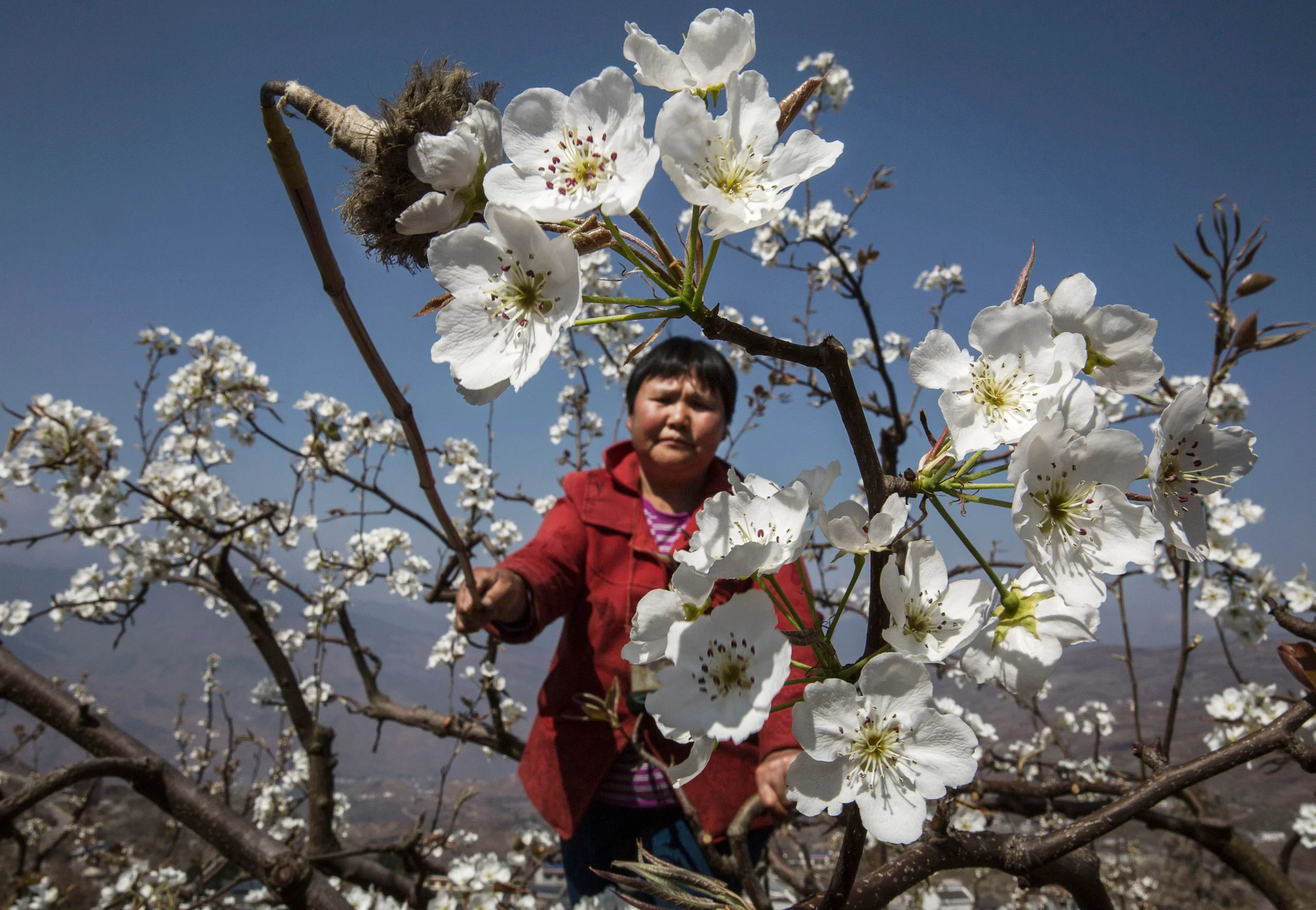
Some places show what pollinator loss can look like. In parts of Sichuan Province, China, wild pollinators have declined sharply in fruit orchards, and farmers now pollinate some blossoms by hand. In Maoxian County, researchers documented how apple and pear growers turned to hand pollination after pollination services failed, with pesticide use and habitat change among the contributing factors (Partap & Ya, 2012). In Hanyuan County, known for its pears, photojournalists have shown workers carrying pollen from tree to tree with feather-tipped sticks (HuffPost, 2016).
Hand pollination works, but it is labor-intensive, and rising labor costs and uncertain yields have raised questions about whether it can last (HuffPost, 2016). These cases show how much effort it takes to replace a service that healthy pollinator populations provide largely for free. They do not mean bees have disappeared everywhere.
What Experts and Policymakers Are Saying
Governments and scientists are starting to respond to pollinator decline. The IPBES has assessed pollinators globally and called for action on habitat, pesticides, and farming practices (Potts et al., 2016). Several countries have introduced national pollinator strategies, and some have restricted the pesticides most harmful to bees.
The concern is just as real at the regional level. At a national workshop on pollination and pollinators in November 2024, experts and officials discussed declining pollination in Karnali Province. LI-BIRD Executive Director Bharat Bhandari noted that pollinator-dependent crops such as apple, citrus, cardamom, avocado, mango, and kiwi expanded 3.7 times faster than other crops between 2001 and 2018, suggesting farmers rely on bees more than ever. He linked the decline to climate change, intensive farming, excessive pesticide use, and the loss of forests and grasslands (Chautari Post Online, n.d.).
A Closer Look: Nepal’s Farmers and the Pollination Project
Two apples. That is what Amaraj Bohora, an apple farmer from Jumla, found when he lifted the net from a tree on a project demonstration farm. The net had kept pollinators out during flowering, and a tree that should have been heavy with fruit had almost nothing. For a district where about half of farm income comes from apples and 80% of people rely on smallholder farming, that small number carries a big warning (Timberlake, 2024).
Farmers are already seeing the signs. In interviews with 116 beekeepers across 10 Jumla villages, occupied hives fell by 44%, and honey yield per hive fell by 50% between 2012 and 2022. Beekeepers blamed climate change and fewer flowers (Kortsch et al., 2024).
Not everyone has the same options. Large commercial growers elsewhere can truck in rented hives. Smallholders in places like Jumla rely mainly on the bees and insects around their farms (Kortsch et al., 2024). Awareness is a second barrier: an earlier project survey found that only 14% of Jumla farmers knew bees benefit their crops (Timberlake, 2024). It is hard to protect a service you do not know you are using.
Nepal is acting on this. An earlier Darwin Initiative project reached about 4,500 farmers (65% of them women) and more than 100 extension workers and officials, and supported a pollinator strategy (Timberlake, 2024; LI-BIRD, 2024). Its successor, the Nepal Pollination Project (October 2025 to March 2029), is led by the University of Bristol with LI-BIRD, HERD International, and the Agriculture and Forestry University. It backs beekeeping for women, youth, and marginalized farmers, supports a National Pollinator Strategy, and plants flowering trees to feed bees year-round, with 1,183 saplings already given to 126 farmers.
The payoff could be large: project estimates suggest Nepali farmers could raise revenue by around 30% by boosting pollinator numbers and diversity (Timberlake, 2024). The lesson applies everywhere: awareness, training, local planting, and national policy work best together.
What We Can Do
The good news is that small actions add up. At home, we can plant flowering plants, herbs, and native species in gardens, balconies, schools, and farm borders, leave small patches of wild vegetation where bees can feed and nest, and buy honey from trusted local beekeepers.
Farmers can protect pollinators while protecting crops. That means using integrated pest management so pesticides are a last resort, not a routine; reading and following pesticide labels, including any warnings about bees; avoiding applications to crops or weeds in flower; and cutting unnecessary spraying (Potts et al., 2016).
At the community and policy level, pollinators need a place in agricultural planning and climate adaptation strategies, alongside clear, locally relevant guidance on pesticide use, support for beekeepers, and protection of the natural habitats bees depend on.
Conclusion
Bees may be small, but their role in our food system is huge. Protecting them is not only about saving an insect. It is about protecting our harvests, our farmers, and the food on our tables. The next time a bee passes by, remember that it may be working harder for your dinner than you think.
Did you know bees were this important to our food supply, or is this news to you?
Next time you see a bee, take a moment to appreciate it.
References
De Luca, P. A., & Vallejo-Marín, M. (2013). What's the ‘buzz’about? The ecology and evolutionary significance of buzz-pollination. Current opinion in plant biology, 16(4), 429-435.
Klein, A. M., Vaissière, B. E., Cane, J. H., Steffan-Dewenter, I., Cunningham, S. A., Kremen, C., & Tscharntke, T. (2007). Importance of pollinators in changing landscapes for world crops. Proceedings of the royal society B: biological sciences, 274(1608), 303-313.
Kortsch, S., Timberlake, T. P., Cirtwill, A. R., Sapkota, S., Rokoya, M., Devkota, K., ... & Saville, N. (2024). Decline in honeybees and its consequences for beekeepers and crop pollination in Western Nepal. Insects, 15(4), 281.
Partap, U., & Ya, T. (2012). The human pollinators of fruit crops in Maoxian County, Sichuan, China. Mountain Research and Development, 32(2), 176-186.
Potts, S. G., Ngo, H. T., Biesmeijer, J. C., Breeze, T. D., Dicks, L. V., Garibaldi, L. A., ... & Vanbergen, A. (2016). The assessment report of the Intergovernmental Science-Policy Platform on Biodiversity and Ecosystem Services on pollinators, pollination and food production.
U.S. Geological Survey. (2025). How many species of bees are there in the world and in the United States? U.S. Department of the Interior. usgs.gov