

Rasuwa–Bhotekoshi flood of 26 August.
Recovery had barely begun when successive disasters unfolded. The scars left by the August 26 flood were followed by floods and landslides across western and south-central Nepal in late September. Then, in the early hours of 11th October, another flash flood swept through settlements along the Budhi Gandaki River in Gorkha leading to a seemingly endless cycle of crisis for the affected communities.
Both of the floods caused by rock-ice avalanches were separate events. Together, they left the country mobilizing new rescue operations while thousands of people affected by the earlier floods were still waiting for safer shelter, restored services and crucial aid to rebuild their lives.
The financing challenge is therefore about more than just raising money. Humanitarian aid, emergency financing, reconstruction funds and livelihood assistance serve different purposes. They also move through different institutions and across different timelines. Confusing them can create the appearance that recovery is fully funded when many affected households have received only short-term relief.
The August flood and what it left behind
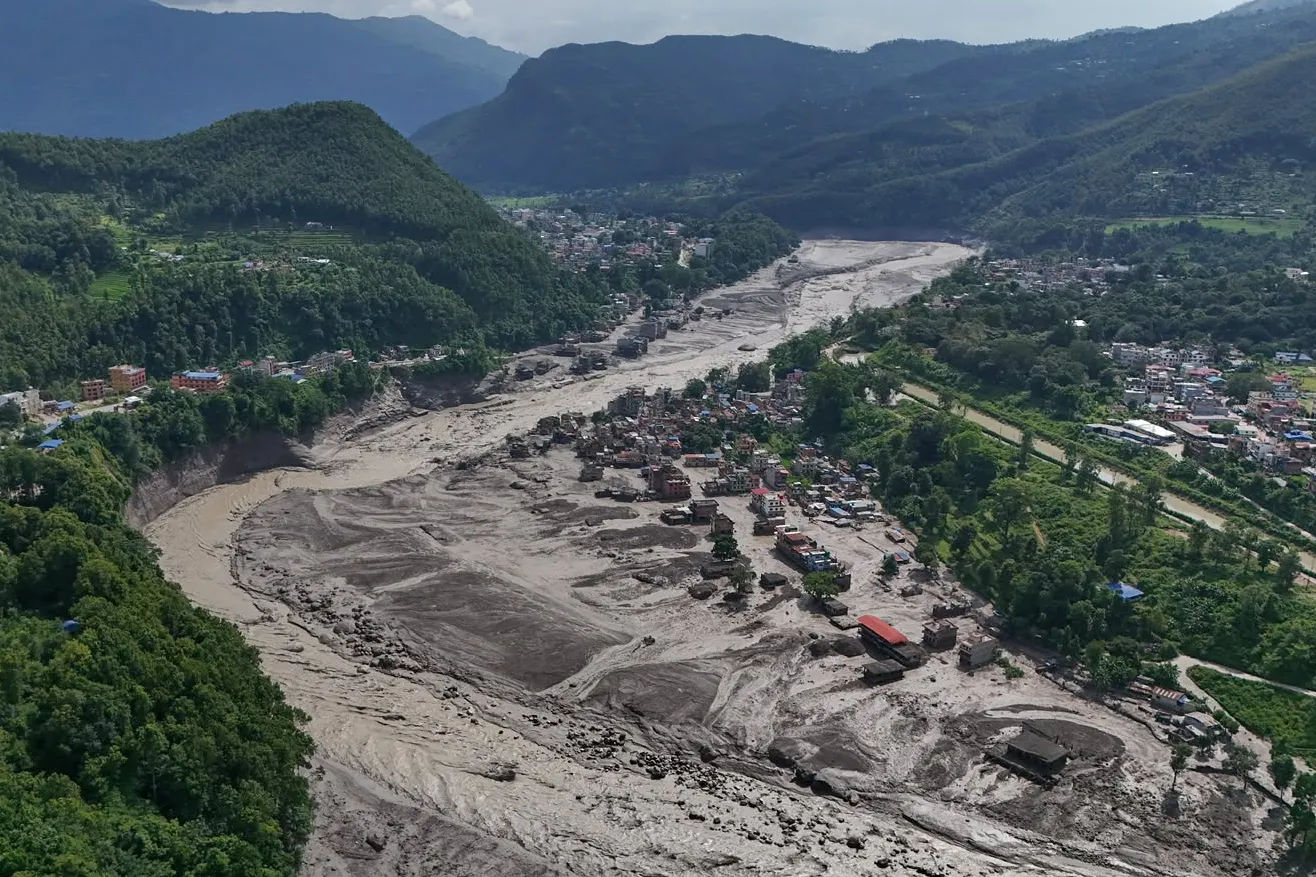
On 26 August 2026, a major flash flood moved through the Bhote Koshi–Trishuli corridor, destroying homes and damaging roads, bridges, public services and energy infrastructure. ICIMOD reported that a large mass of rock and glacier ice broke away from Langtang Lirung and fell into the Lhende Khola valley. It then developed into a fast-moving debris flow that travelled through the Bhote Koshi and Trishuli river system. Technical investigations into the full sequence of geological and hydrological processes continued after the event (ICIMOD, 2026a).
The number of casualties and missing people changed as search operations and identification work progressed. A United Nations situation report recorded 1,453 deaths, 5,644 people missing and 13,795 people rescued as of 23 September. It was also reported that 1,112 people remained in 21 displacement centres (UNRCO Nepal, 2026b).
By October 10, reports based on Nepal Police figures placed the death toll at 1,457, while 4,720 people were still reported missing. The reports also recorded 1,231 displaced people staying in government-run holding centres, showing that many survivors continued to depend on temporary shelter and assistance. Together, these figures provide a clearer picture of the disaster’s immediate human impact, including deaths, unresolved missing-person cases, and continuing displacement. However, they reflect the information available at that time and should not be understood as final totals, as figures may change when missing people are located, deaths are confirmed, and records from different agencies are reconciled (Khabarhub, 2026).
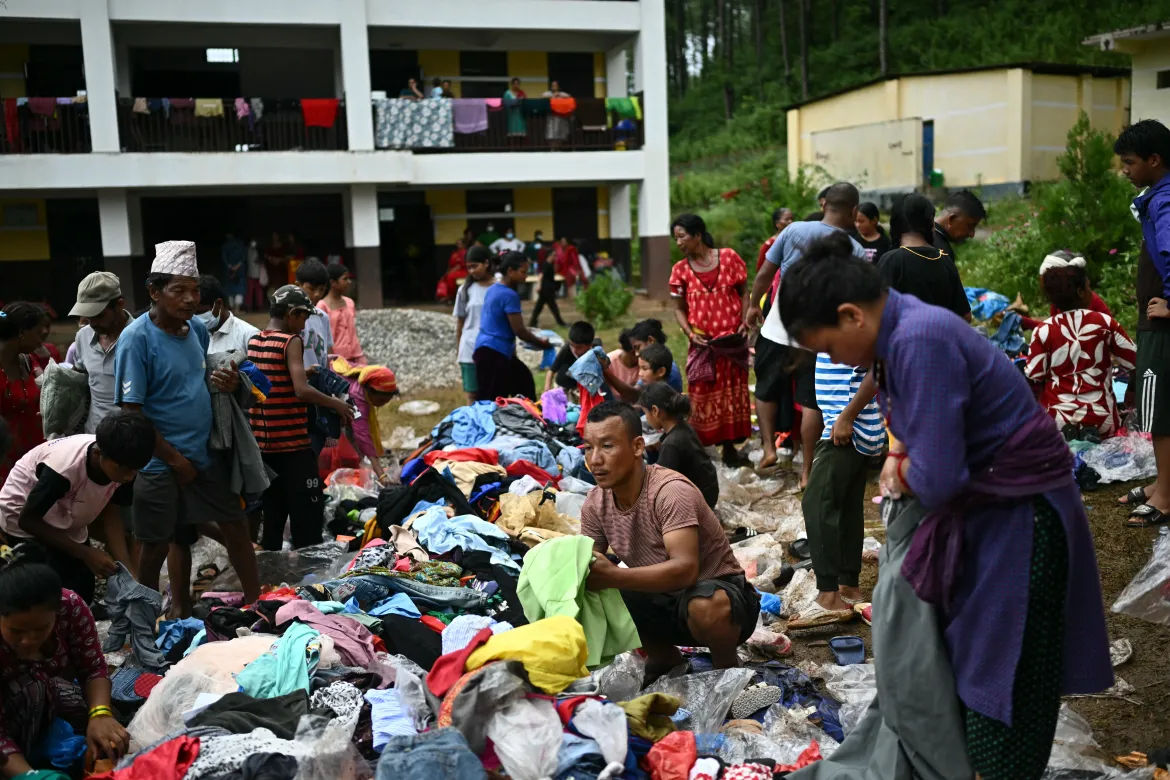
The numbers from temporary shelters show what daily life looked like weeks after the flood. An October 8 assessment by the International Organization for Migration covered 48 sites containing 1,335 households and 3,641 people. Among them were 128 unaccompanied or separated children, 42 older people requiring support and 340 people reported to have chronic illnesses. Only 54 percent of the assessed sites were protected from the weather. Relocation to safer shelter was identified as a priority at 89 percent of the sites (IOM, 2026).
These figures represent families living with uncertain return dates, inadequate shelter and disrupted access to health care, education and income. In Bhaise, Nuwakot, early-childhood teacher Shobha Adhikari described looking down at the stones and silt where her home, school, and village paths had once stood. Around 50 households in the village were swept away and children were left without their usual classrooms and places to meet and play. Her account illustrates the meaning of recovery down to a household level: a safe home, a functioning school, and some certainty about what comes next (United Nations in Nepal, 2026b).
Late-September rains created additional losses
Recovery from the August flood was still in its early stages when continuous rainfall beginning on the 24th of September caused floods and landslides across western and south-central Nepal.
By the morning of 28 September, at least 21 people had died. More than 1,500 people from 747 households had been displaced, and 179 houses had been completely damaged. Roads and bridges were also affected, while authorities continued to collect reports from different districts (Pariyar et al., 2026).
These casualties and losses were separate from those caused by the August flood. Still, they created additional need for shelter, road restoration and household assistance at a time when the earlier humanitarian response was already placing heavy demands on government agencies and relief organizations.
These incidents showcase how the recovery is unfolding in a multi-hazard situation in which communities are not just facing isolated disaster, but different ones that are at risk of recurring before the recovery is even complete. Recent research on the Gyirong–Rasuwa disaster also emphasizes the need for integrated multi-hazard risk assessment because cascading mountain hazards may not be adequately covered by warning systems designed mainly around rainfall and river monitoring (ICIMOD, 2026a).
There exists economic consequences that extend towards losing access to work, income and resources required for sustaining the livelihood of affected families. The employment effects of the August flood cannot be measured only by counting damaged workplaces. The International Labour Organization estimated that approximately 21,400 employed people lived within four kilometres of the mapped flood footprint. It cautioned that this figure measures possible exposure. This is neither a count of workers directly affected, nor an estimate of jobs lost (ILO, 2026a).
Damage to roads, bridges and electricity systems can interrupt economic activity outside the visibly flooded area. Farmers may be unable to reach markets. Hotels and restaurants may lose customers. Guides, porters and transport workers can lose working days when routes close, while small and home-based businesses may struggle to obtain supplies or replace damaged equipment (ILO, 2026a; ILO, 2026b).
Disruption to trade with China added another source of uncertainty. According to the ILO, the Rasuwa and Tatopani crossings accounted for around 22 percent of Nepal’s imports from China in 2025–26, while Rasuwa handled nearly half of Nepal’s exports to China. The organization identified approximately 392,400 workers in selected industries and occupations in Bagmati Province who could potentially be exposed to trade disruptions.
Again, this figure does not mean 392,400 jobs will be lost. There are multiple factors that come to play here since some of the workers may not depend on the affected crossings, and the actual consequences will depend on how long the disruption lasts, whether other routes are available and how businesses respond (ILO, 2026a).
Nepal’s high level of informal employment adds to the concern. Daily-wage workers, self-employed people and microenterprises often have little savings, insurance or social-protection coverage. Even a temporary interruption can mean an immediate loss of household income. The ILO has therefore called for income and enterprise assistance alongside employment-intensive reconstruction, skills development, occupational-safety measures and stronger social protection (ILO, 2026a; ILO, 2026b).
Relief funding is not a reconstruction budget
The United Nations and its partners appealed for USD 49.6 million to provide food, shelter, health care, water, sanitation, protection and logistical support to 84,270 flood-affected people through 31 December 2026. Although USD 2.5 million was initially provided through the Central Emergency Response Fund, most of the required funding had not yet been secured as of 7 September 2026. (United Nations in Nepal, 2026a; UNRCO Nepal, 2026a).
The appeal was never intended to pay for the country’s full reconstruction. Its purpose was to protect lives, prevent further hardship and provide urgent assistance. Rebuilding homes, roads, energy systems, schools and productive assets requires separate funding and longer implementation periods.
A World Food Programme situation report cited the preliminary government’s Rapid Damage and Needs Assessment, which estimated recovery and reconstruction needs at USD 5.3 billion, with infrastructure accounting for about three-quarters of the total. (WFP, 2026).
A later IOM situation report cited approximately USD 4.72 billion in recovery and reconstruction needs beyond the first six months, in addition to USD 57.66 million in early-recovery requirements. The different figures reflect the specific timeframe and scope reported by each assessment (IOM, 2026).
The World Bank Group separately announced that it had made up to USD 170 million in emergency financing available to support the government’s response and begin restoring services and infrastructure. “Made available” does not entail that the entire amount had already been disbursed or spent (World Bank Group, 2026a).
This distinction affects how financial announcements should be understood. An appeal states how much an organization seeks. An approved facility indicates access to financing. Disbursement means that money has been released. None of these, by itself, shows how much assistance has reached individual households.
A new emergency in Gorkha
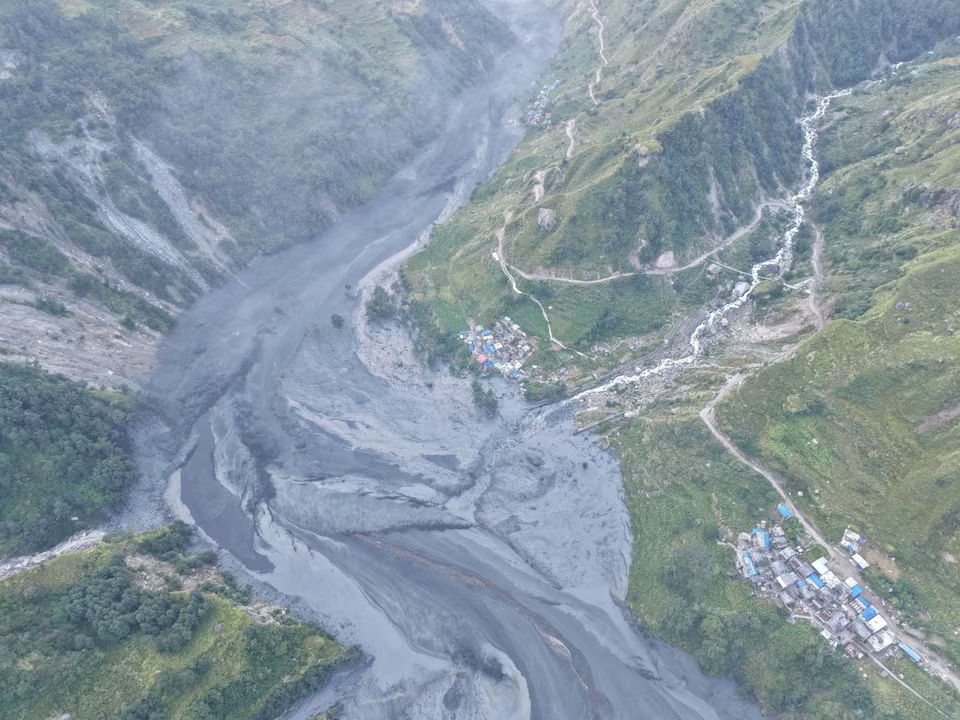
Early on 11 October, a flash flood moved through the Budhi Gandaki river system in Gorkha. ICIMOD reported that a landslide near Chumchet may have blocked the river temporarily before the blockage failed, releasing water, mud, sediment and debris downstream. The account was preliminary, and the exact sequence remained under investigation (ICIMOD, 2026b).
Reuters reported that five people were out of contact and 49 had been rescued. Around a dozen houses and two suspension bridges were swept away, while a highway bridge and part of a hydropower construction camp were damaged. Authorities warned communities in several downstream districts to move to safer locations (Sharma, 2026).
What recovery financing needs to cover
By 11th of October, Nepal was simultaneously managing search and rescue, temporary shelter, victim identification, infrastructure repairs and livelihood losses from more than one disaster. These needs cannot be financed through a single appeal or emergency loan.
The World Bank’s October development update recommended that reconstruction incorporate updated multi-hazard assessments, closer attention to the location and design of infrastructure, and greater redundancy in transport, energy and communication systems. It also recommended stronger early-warning systems and an integrated social-protection system that can deliver assistance quickly to households after disasters (World Bank Group, 2026b).
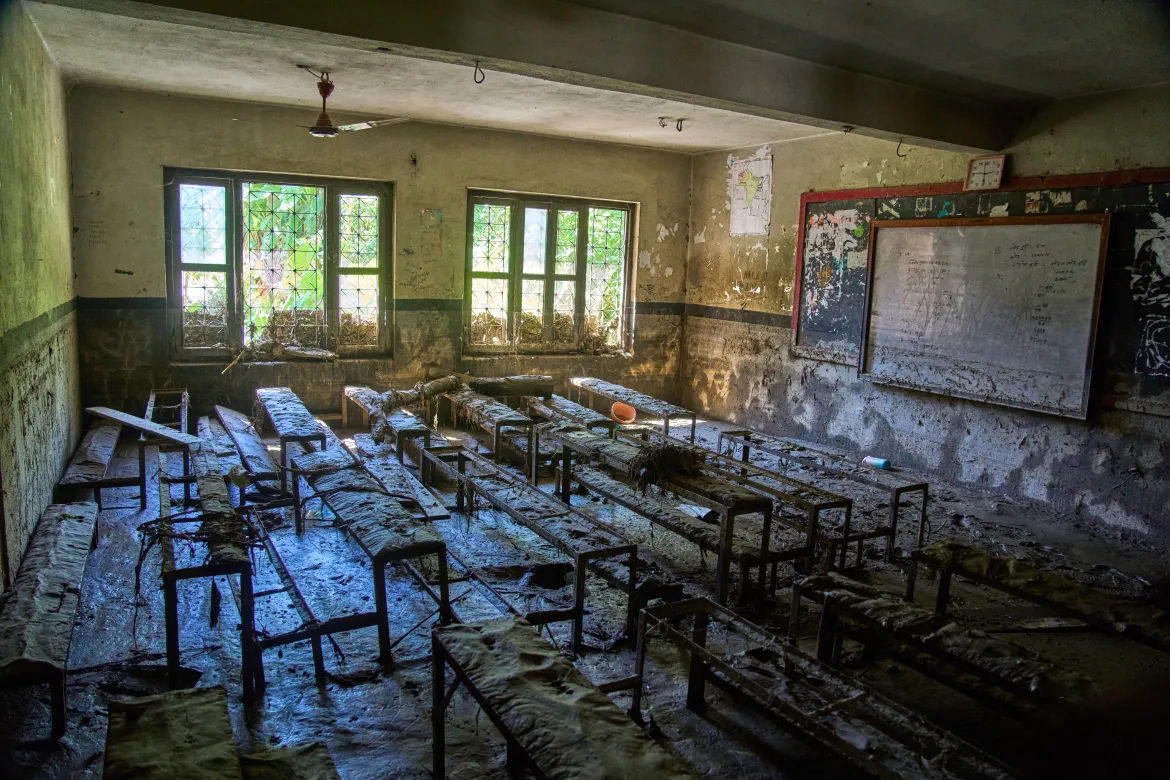
Recovery must be reflected in practical outcomes. Affected families require secure places to live before winter arrives, along with access to nutritious meals, adequate clothing, proper hygiene and sanitation. Normalcy has been disrupted, and children’s vulnerability must be considered by giving them special attention and ensuring access to functioning schools, uniforms and other essential supplies. Workers and small businesses need opportunities to earn and sustain again. Roads, water systems and health services must be restored, while avoiding reconstruction in high-risk locations wherever possible.
The value of funding announcements matters, but it is only one measure. What matters to affected communities is whether money moves from appeals and financing facilities into safe housing, restored services, reliable transport and household livelihoods. Nepal’s immediate task is to connect those parts of recovery without treating emergency relief as though it has already paid for reconstruction and long-term resilience.
References
International Centre for Integrated Mountain Development. (2026a). Gyirong–Rasuwa flood 2026. https://www.icimod.org/kyirong-rasuwa-flood-2026-nepal-china-border/
International Centre for Integrated Mountain Development. (2026b, October 11). Landslide-dam breach may have triggered Budhi Gandaki flash flood. https://www.icimod.org/press-releases/landslide-dam-breach-may-have-triggered-budhi-gandaki-flash-flood/
International Labour Organization. (2026a, September). Employment implications of the floods in Nepal: A preliminary rapid assessment. https://www.ilo.org/sites/default/files/2026-09/Brief_Employment%20_floods_Nepal%20.pdf
International Labour Organization. (2026b, October 1). Nepal floods threaten jobs and livelihoods far beyond affected areas, ILO assessment finds. https://www.ilo.org/resource/news/nepal-floods-threaten-jobs-and-livelihoods-far-beyond-affected-areas-ilo
International Organization for Migration. (2026, October 8). Nepal flood response situation report #7. https://nepal.iom.int/resources/nepal-flood-response-situation-report-7-8-october-2026
Khabarhub. (2026, October 10). Bhotekoshi floods: Official death toll reaches 1,457. https://english.khabarhub.com/2026/10/571438/
Pariyar, D., Aryal, M., & Gurung, A. (2026, September 27). Heavy rain kills at least 21 across western Nepal. The Kathmandu Post. https://kathmandupost.com/national/2026/09/27/heavy-rain-kills-at-least-17-across-western-nepal
Sharma, G. (2026, October 11). Nepal urges villagers to evacuate after flood triggered by landslide, five missing. Reuters. https://www.usnews.com/news/world/articles/2026-10-10/nepal-urges-villagers-to-evacuate-after-flood-triggered-by-landslide
United Nations in Nepal. (2026a, September 4). Nepal floods: UN and partners launch $49.6 million emergency appeal. https://nepal.un.org/en/322156-nepal-floods-un-and-partners-launch-496-million-emergency-appeal
United Nations in Nepal. (2026b, September 8).“Nothing but riverbank now”. https://nepal.un.org/en/323259-%E2%80%9Cnothing-riverbank-now%E2%80%9D
United Nations Resident Coordinator’s Office Nepal. (2026a, September 7). Nepal Rasuwa flood situation update No. 7. United Nations in Nepal. https://nepal.un.org/sites/default/files/2026-09/Nepal%20Rasuwa%20Flood%20Situation%20Update%20No.7_revised%20%281%29_1.pdf
United Nations Resident Coordinator’s Office Nepal. (2026b, September 22). Nepal Rasuwa–Bhotekoshi flood situation report No. 9. United Nations in Nepal. https://nepal.un.org/sites/default/files/2026-09/Nepal%20Rasuwa-Bhotekoshi%20Flood%20Situation%20Report%20No.9_20260922.pdf
World Bank Group. (2026a, September 23). Statement on catastrophic floods in Nepal. https://www.worldbank.org/en/news/statement/2026/09/23/statement-on-catastrophic-floods-in-nepal
World Bank Group. (2026b, October 6). Nepal’s growth projected to slow following devastating Rasuwa flood. https://www.worldbank.org/en/news/press-release/2026/10/06/nepal-s-growth-projected-to-slow-following-devastating-rasuwa-flood
World Food Programme. (2026, September 17). WFP Nepal situation report on the Rasuwa flood response, 17 September 2026. ReliefWeb. https://reliefweb.int/report/nepal/wfp-nepal-situation-report-rasuwa-flood-response-17-september-2026