

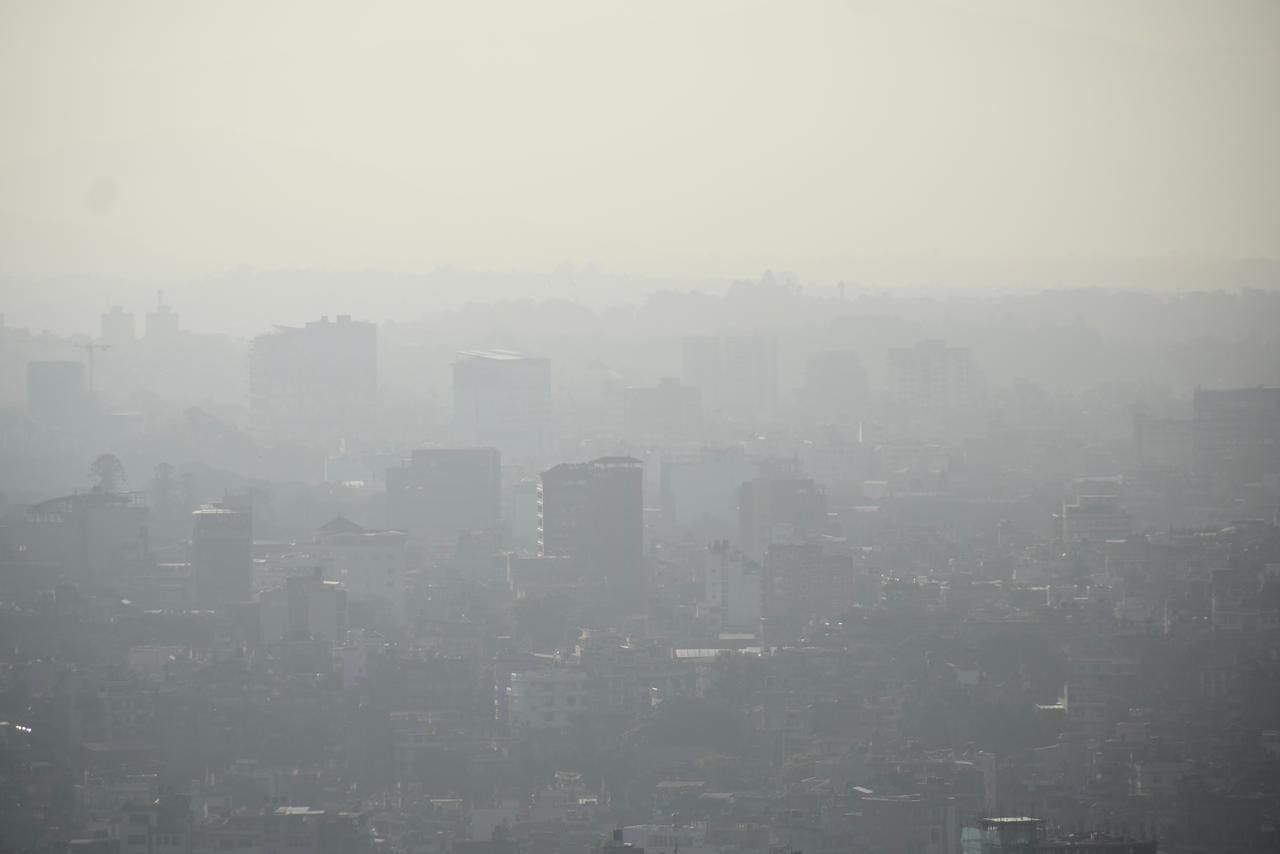
The concrete jungle is covered with layers of polluted haze as anyone would gaze from the hilltop of Swayambhu or any of the hill stations surrounding the valley. The density of haze increases further when one starts climbing up the hills, reducing visibility, dampening the green hill slopes that surround the bowl-shaped valley.
With an increase in pollutant levels in the atmosphere, which ultimately thickens the air, it results in flight delays, schools are forced to stop physical classes, and a thick layer of pollutants swamps the faces of commuters. This alarming situation often leads people to the emergency wards of government hospitals, exceeding the typical occupancy limit.
The fact that Nepal's air crisis has escalated from an environmental issue to a national health emergency is a deep concern.
A Public Health Emergency in Plain Sight
Nepal’s air quality is far worse than the World Health Organization’s (WHO) air quality standards, making this a growing public health crisis.
The average readings of Kathmandu’s pollution exceed the annual average PM 2.5 concentration of 5 µg/m3, while 24-hour average exposures should not exceed 15 µg/m3 for more than 3 - 4 days per year, as prescribed by the World Health Organization.
PM2.5 refers to particulate matter (solid or liquid droplets) in the air less than 2.5 micrometers in diameter. It is among the most dangerous pollutants that can get past the nose and throat to penetrate the lungs and even the bloodstream. PM2.5 particles are small and are also likely to stay suspended in the air for a long time, increasing the chances of people inhaling them.
According to the Environmental Protection Agency’s air quality index, an air quality reading of 151–200 is considered unhealthy, causing everyone to experience problems and sensitive groups to feel more severe effects.
When air quality reaches 201-300, it is considered a very unhealthy level, and health risks increase for everyone in the area. When it crosses 300, it becomes hazardous, meaning that the air is of extremely poor quality and poses serious health risks to everyone.
The World Bank has identified air pollution as the leading risk factor for death and disability in Nepal, surpassing malnutrition and tobacco. The number of premature deaths linked to air pollution exposure soared to an estimated 26,000, and the average Nepali loses around 3.4 years of life expectancy because of polluted air (World Bank, 2025).
The WHO's recommended annual PM2.5 limit of 5 μg/m³ is also exceeded by Kathmandu's pollution levels, indicating a persistent and hazardous health burden (World Health Organization [WHO], 2023).
When inhaled, these small particulate matter particles, such as black carbon, finely ground gravel, or silica dust, can cause scarring to lung tissues that leads to an overall reduction in lung function. Material with carcinogenic properties can penetrate deep into the lungs and accumulate, leading to heightened instances of cancer. These tiny particles can also cross over into the bloodstream via the air sacs in the lungs, wreaking havoc on an individual’s health by causing damage to blood vessels as well as organs such as the liver and kidneys (along with affecting reproductive health) (IQ Air, 2025).
The International Center for Integrated Mountain Development (ICIMOD), a regional intergovernmental learning and knowledge sharing center, recorded a mean PM2.5 level to be around 50 µg/m³between December 2025 and February 2026.
As per the center, the mean PM2.5 level in December 2024 was nearly 1.5 times higher than that in 2025, while the mean level between December 2024 and February 2025 was nearly 1.3 times higher than that between December 2025 and February 2026.
Hospitals at Capacity: The Frontline of a Climate-Health Crisis
Nepal’s Ministry of Health reports that air pollution causes 42,000 deaths in Nepal annually, 19% of which are children under five, and 27% are individuals over 70. The data indicates that air pollution has decreased the life expectancy of Nepali by 4.1%.
Despite the recurrence of the pattern annually, Nepal’s health sector always falls victim to overlooked health crises.
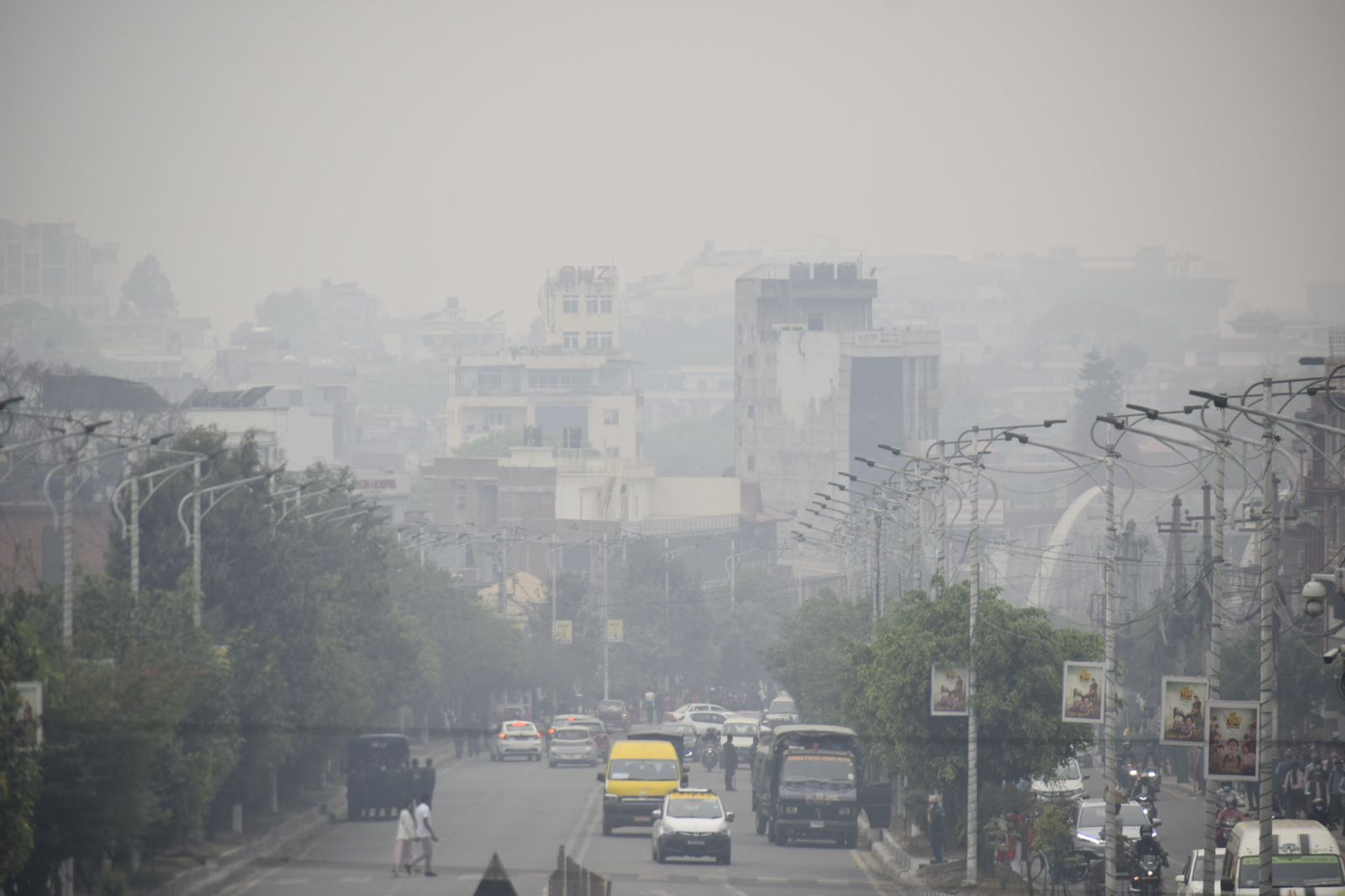
As the bowl-shaped valley’s AQI dips, patients flood the Tribhuvan University Teaching Hospital’s (TUTH) outpatient department. The governmental hospital, which has a capacity of accommodating 250 patients daily, sees an upsurge of over 300 patients. The emergency wards report approximately 25 admissions per day for respiratory-related complexities. Around 80 patients require Intensive Care Unit (ICU) beds, ventilators, or oxygen support (Adhikari, 2025).
This is a regular pattern that has been occurring every year. Hospital record patoents suffering from severe bronchitis, pneumonia, and asthma. Even very young children are diagnosed with acute respiratory distress (The Kathmandu Post, 2026).
An environmental health crisis that was previously predicted to take decades to develop is now affecting these inner-city hospitals.
Apart from the respiratory problems, people have also been experiencing conditions that can include ones such as ischemic heart disease, arising from when inadequate amounts of oxygen reach the heart tissues, leading to a deterioration in function. Further heart complications can include arrhythmias, increased instances of heart attacks, and problems related to blood pressure regulation.
Babies that are exposed whilst in the womb have an increased chance of miscarriage, or being born prematurely or with low birth weight, thus heightened pollution levels lead directly to higher rates of infant mortality, as well as large amounts of the population having their lives cut short due to health problems stemming from air pollution. (IQ Air, 2025)
Why Kathmandu Cannot Breathe
Kathmandu’s geography worsens the problem. The bowl-shaped valley is encircled by hills that retain pollutants, particularly in the winter and before the monsoon season.
However, this crisis cannot be explained solely by topography.
Kathmandu has polluted air, primarily from pre-monsoon forest fires that were exacerbated by drought, according to the ICIMOD. Black carbon and fine particulates, which are pollutants that pose health risks and contribute to climate change, are released by these fires (ICIMOD, 2025).
Several local sources also converge with similar findings:
● Vehicles failing emissions tests (with high failure rates)
● Ongoing use of aging diesel vehicles
● Construction dust and industrial outputs
● Household biomass burning
● Seasonal open waste burning
● Transboundary pollution from adjacent regions
This is a systems crisis rather than a single-source issue.
The IQ Air, a Swiss air quality monitoring organization, points out another element contributing to the levels of pollution- the catastrophic 7.8 magnitude earthquake of 2015. The leveling of many historic areas and domiciles around the capital is claimed to have led to a massive spike in dust pollution.
The Swiss air quality monitor claims that much of the dust from the natural disaster induced pollution still remains to this day due to the lack of proper cleanup conducted by the country. Many of the affected areas still lie in ruins due to Nepal not having the infrastructure needed to repair such massive amounts of damage (IQ Air, 2025).
Adding woes to the valley’s annual dipping AQI is the brick kilns that start operating for half the year starting from January, the peak winter season when the pollutants settle in the lower areas.
Experts have pointed out the delay in the establishment of the standards for the coals used in these kilns as one of the contributing factors for the skyrocketing pollution, as no standards have been drafted for the coals being used in these smoke-spewing open-air ovens. Though the Department of Industry had asked Nepal Bureau of Standards and Metrology to set the standards, they has yet to be drafted.
These low-grade coals, which are high in Sulphur and imported mainly from India, further exacerbating the pollution levels of the bowl-shaped valley. As per the official record,s there are 89 brick kilns operating within Kathmandu Valley that on an annual basis consume over 56,100 tons of coal and 330 tons of sawdust and wood as alternative fuels (Ministry of Population and Environment, Department of Environment, 2024). According to the report, there are 1349 brick factories producing over 5.14 billion bricks each year, emitting about 1.25 million tonnes of carbon dioxide annually.
Nearly 40% of winter particulate pollution in the Kathmandu valley originates outside Nepal. Black carbon carried from Punjab, Haryana, and Uttar Pradesh in India, besides parts of Pakistan, rides the winds north, settles on Himalayan snow, and accelerates glacier melt by absorbing heat (Srivastava, 2026).
In addition to filling hospitals, the polluted air is also draining Nepal’s economy. As per the World Bank’s report of 2025, the Himalayan nation between India and China spends more than 6% of its Gross Domestic Product (GDP) yearly on medical costs, lost productivity, and early mortality. Cumulative economic losses from dirty air are estimated to be around $130 per Nepali each year, which is nearly equivalent to a full month's minimum wage, as per the report(World Bank, 2025).
But no successive government or authorities has been instrumental in addressing this issue. Rather the continued exposure to toxic air has contributing 75% of chronic obstructive pulmonary disease cases, 46% of strokes, 44% of ischemic heart disease, 41% of lower respiratory infections, 38% of lung cancer, 30% of neonatal issues like low birth weight and preterm birth, and 20% of diabetes, reads the report (World Bank, 2025).
The report further warns that in the absence of additional measures, the air pollution will worsen significantly by 2035. Under the baseline scenario, average PM2.5 concentrations will reach 52 µg/m³ in Kathmandu Valley and 42 µg/m³ in the Tarai, far above the WHO’s interim target of 35 µg/m³.
Climate Change Is Tightening the Noose
Public health, climate change, and air pollution are now intertwined. The smog in Kathmandu is a component of a regional climate feedback loop, and not just an urban problem.
With the change in the climatic condition, Nepal has continued to experience a dry winter spell, which further fuels the rising air pollution raging the wildfire across the Himalayan Nation.
The Department of Hydrology and Meteorology’s Climate Division, issuing the winter outlook at the end of 2025, announced that most parts of the country are likely to witness less rainfall than normal during the three winter months (December to February). Likewise, both minimum and maximum temperatures may remain above average during this period.
According to the forecast, the northern parts of Sudurpaschim and Karnali provinces and the north-western parts of Gandaki province have an equal chance of below normal, normal, or above normal rainfall. It had projected a 55 to 65% chance of below normal rainfall in the eastern and southern parts of Sudurpaschim province, the southern parts of Karnali province, the western parts of Lumbini province, the southern parts of Bagmati province, the northern parts of Madhesh province, and the central parts of Koshi province.
Similarly, other areas, including central parts of Sudurpaschim and Karnali provinces, the central and eastern parts of Lumbini province, eastern parts of Gandaki province, central and northern parts of Bagmati province, southern parts of Madhesh province, and some areas of Koshi province, have a 45 to 55% chance of below-average normal rainfall. The rest of the country has a 35 to 45% chance of below-average rainfall. With the winter rainfall already gone, the forecast has almost matched.
This weather pattern that has been affecting the Himalayan Nation has also been fueling the forest fires, which adds more to the rising air pollution. The dry and arid temperature, which is the result of the rising temperatures, are contributing to an increase in the frequency and severity of forest fires.
This not only has been impacting human life, but also the black carbon from these fires speeds up glacier melt in the Hindu Kush Himalaya, which has an impact on South Asian water systems (ICIMOD, 2025).
Erratic weather patterns, extreme rainfall in a short span of time, lack of rain for months, continued rain for several days, and other unusual weather events caused by climate change have become frequent in Nepal, affecting thousands of people and threatening livelihoods.
Beyond Awareness: What Must Change
Closing schools and wearing masks won't solve Nepal's air crisis. Cleaner transportation systems, more stringent emissions regulations, and integrated urban planning are the main focuses of the WHO's Kathmandu Urban Health Initiative (WHO, 2023).
The World Bank (2025) suggests:
● Accelerating electric mobility transition
● Strengthening emission testing enforcement
● Transitioning households away from biomass fuels
● Regional cooperation on transboundary pollution
● Investing in air quality monitoring and health impact assessment
A relatively clean electricity base is made possible by Nepal's hydropower potential, which gives it a strategic advantage. If political will aligns with implementation, scaling up electric buses, eliminating diesel fleets, and enforcing emission standards could drastically reduce urban pollution.
The Kathmandu Metropolitan City, which previously had been conducting the random test of the vehicles plying on the road, has yet to resume the emission tests since Mid-July. The test, which has been halted with the expiration of the contract of an engineer, is yet to resume despite the fact that nearly two-thirds of the vehicles at the time of the test had failed to abide by the pollution control measures.
The city office started carrying out emission testing on January 13 in coordination with the traffic police and the federal Department of Environment and the Department of Transport Management. The test showed that around 80 percent of diesel-fueled vehicles- buses, micro-buses, and Tata pick-up trucks- on Kathmandu’s roads emit black smoke beyond permissible levels. Likewise, around 30 percent of petrol vehicles- cars and motorcycles- also failed the tests.
The metropolis carried out emission testing on over 3,000 vehicles on a random basis. It also had developed pollution control guidelines as per the KMC Environment and Natural Resources Protection Act-2021 (The Kathmandu Post, 2025).
A Crisis That Can No Longer Be Normalized
Pollution is no longer an invisible problem when nonsmokers get lung cancer, when students can't concentrate because of headaches and eye irritation, or when intensive care units overflow during smog episodes.
It turns into a governance metric.
The haze in Kathmandu is institutional, not merely atmospheric.
It indicates that environmental management, urban policy, and health planning are still functioning independently, even though air pollution continues to be the biggest health risk in Nepal.
Whether the air is unhealthy is no longer a question. The real question is whether Nepal will handle this as a systemic emergency or not, because the Kathmandu valley might not be the only place running out of breath if current trends continue.
References
Adhikari, B. P. (2025, April 7). Increasing air pollution keeps Nepal’s health sector and people’s life expectancy at stake. ANI News. https://www.aninews.in/news/world/asia/increasing-air-pollution-keeps-nepals-health-sector-and-peoples-life-expectancy-at-stake20250407125326/
Government of Nepal, Ministry of Energy, Water Resources and Irrigation, Department of Hydrology and Meteorology. (2026). Climate services document [PDF]. https://dhm.gov.np/uploads/dhm/climateService/1764737083_79707b3cb101a0b2aa67.pdf
Government of Nepal, Ministry of Population and Environment, Department of Environment. (2024). Brick Kiln Stack Emission Monitoring in Kathmandu Valley: Final report. https://doenv.gov.np/downloadfiles/Final-Report-Brick-Kiln-Emission-55227-65257-1663670196-%281%29-1667889291.pdf
International Centre for Integrated Mountain Development. (2025). Kathmandu choked on polluted air for 75 of the last 90 days. https://www.icimod.org/press-release/kathmandu-choked-on-polluted-air-for-75-of-the-last-90-days/
IQAir. (2026, February 12). Kathmandu among top 10 most polluted cities in the world. https://www.iqair.com/us/newsroom/kathmandu-among-top-10-most-polluted-cities-in-the-world-2-12-2026/
Srivastava, P. (2026, February 6). Cleaning up the Himalayan airshed. Nepali Times. https://nepalitimes.com/opinion/cleaning-up-the-himalayan-airshed
The Kathmandu Post. (2025, November 7). Kathmandu yet to resume vehicle emissions testing halted since mid-July. https://kathmandupost.com/kathmandu/2025/11/07/kathmandu-yet-to-resume-vehicle-emissions-testing-halted-since-mid-july
The Kathmandu Post. (2025, December 8). Dry, warm winter likely for fourth year in a row. https://kathmandupost.com/climate-environment/2025/12/08/dry-warm-winter-likely-for-fourth-year-in-a-row
The Kathmandu Post. (2026, February 13). Valley’s public hospitals overwhelmed as air pollution fuels respiratory illnesses. https://kathmandupost.com/health/2026/02/13/valley-s-public-hospitals-overwhelmed-as-air-pollution-fuels-respiratory-illnesses
World Bank. (2025). Towards clean air in Nepal: Benefits, pollution sources, and solutions (Report No. P176456). https://documents1.worldbank.org/curated/en/099060525033528377/pdf/P176456-fd25d1c4-c05a-4740-9984-ada6a89056a2.pdf
World Bank. (2025, June 17). Air pollution is the number one health risk factor in Nepal. https://www.worldbank.org/en/news/press-release/2025/06/17/air-pollution-is-the-number-one-health-risk-factor-in-nepal
World Health Organization. (2023). WHO global air quality guidelines. https://www.who.int