
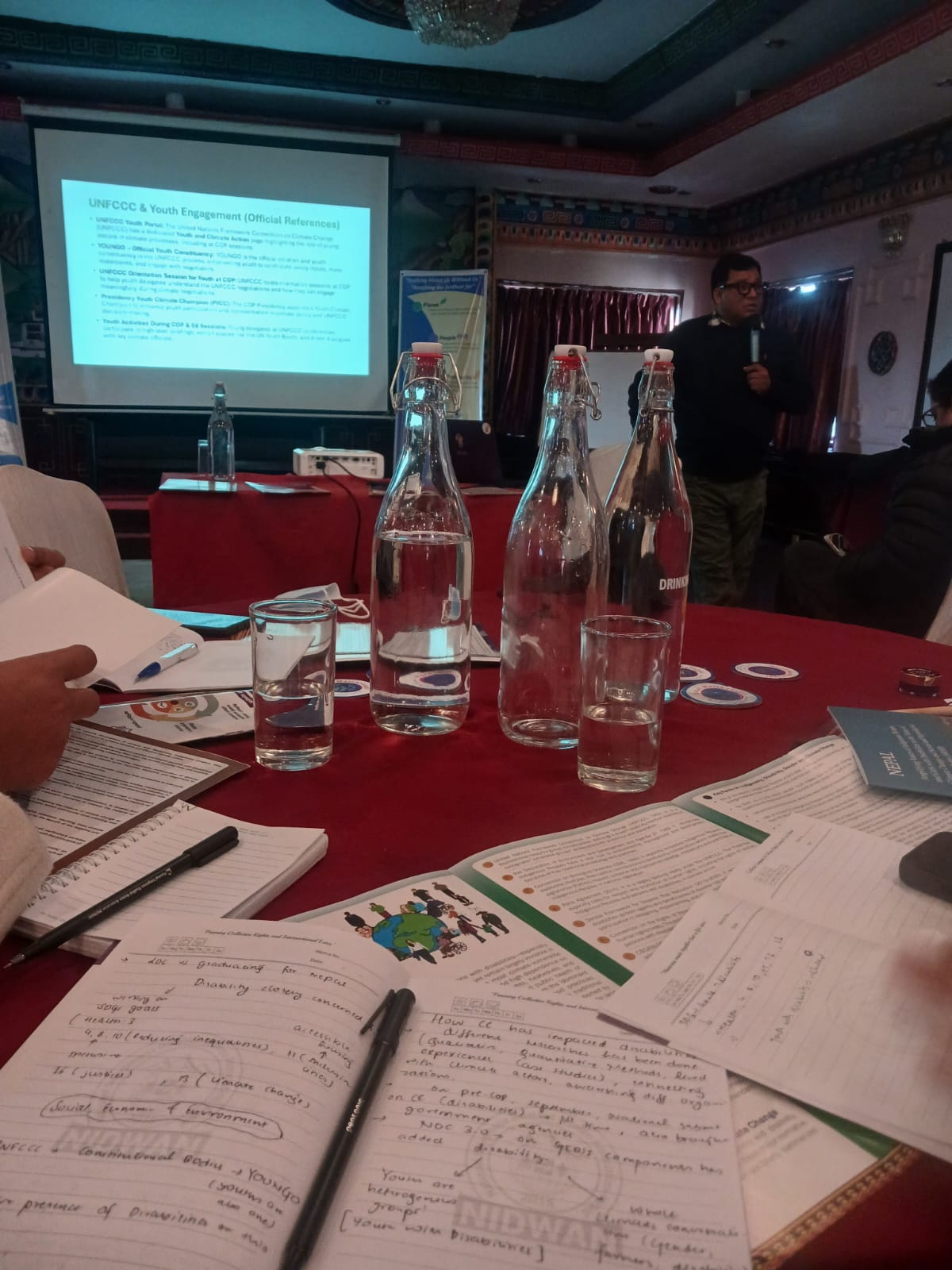
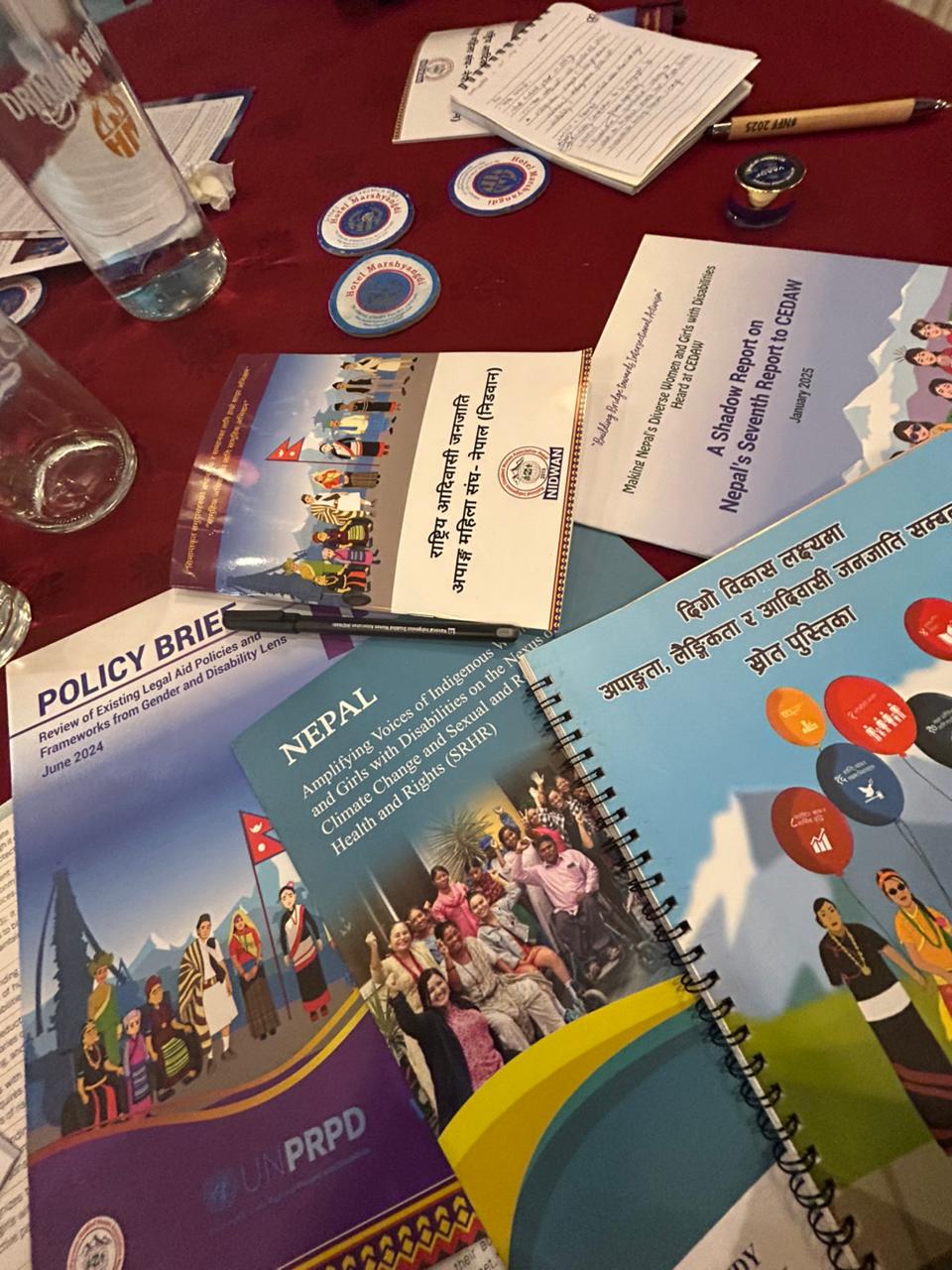
On 25 December 2025, an important dialogue on inclusive climate action was organized by the National Indigenous Disabled Women Association Nepal (NIDWAN) in collaboration with Nepalese Youth for Climate Action (NYCA), with support from the Disability Rights Fund. The event brought together youth organizations on a shared platform to raise awareness about disability inclusion and intersectionality in climate change discussions and actions.
Climate change does not affect everyone in the same way. Yet, persons with disabilities, Indigenous communities, and women, who are often among the most affected, are still largely missing from climate conversations, decision-making spaces, and solution-building processes. Whether it is disaster risk, changing weather patterns, or access to information and resources, these communities remain at the frontlines of climate impacts while being left behind in policies and advocacy. Addressing this gap was the core purpose of the event.
Climate change does not affect everyone in the same way. Yet, persons with disabilities, Indigenous communities, and women, who are often among the most affected, are still largely missing from climate conversations, decision-making spaces, and solution-building processes. Whether it is disaster risk, changing weather patterns, or access to information and resources, these communities remain at the frontlines of climate impacts while being left behind in policies and advocacy. Addressing this gap was the core purpose of the event.
The program began with introductions from participating youth organizations, followed by interactive group discussions with youth from diverse backgrounds. One of the most powerful sessions was a presentation highlighting the structural, social, and attitudinal barriers faced by persons with disabilities in climate action spaces. NIDWAN strongly emphasized that diversity exists within youth itself across gender, disability, indigeneity, and social identity and supported this message with research-based evidence and lived experiences.
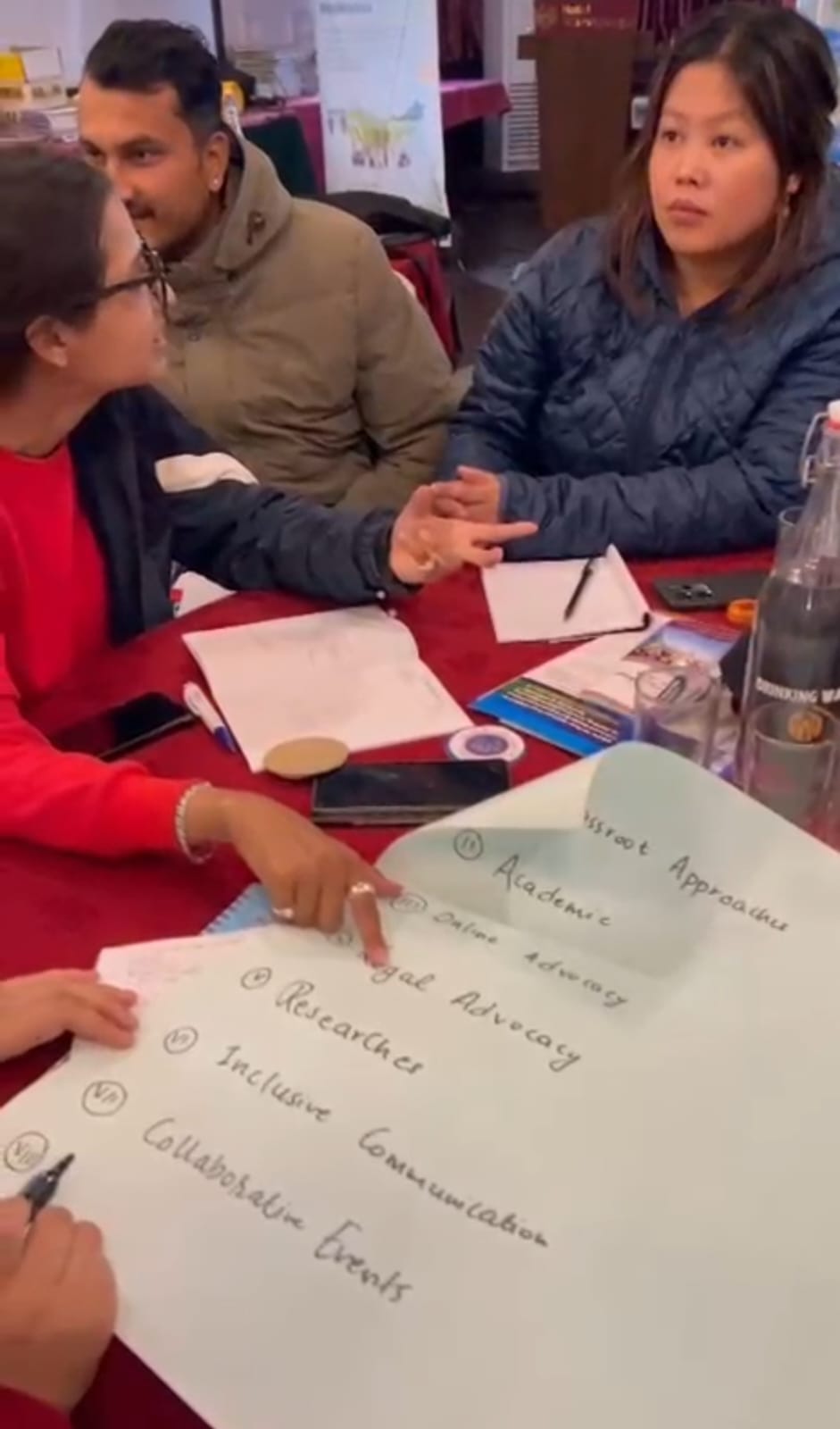
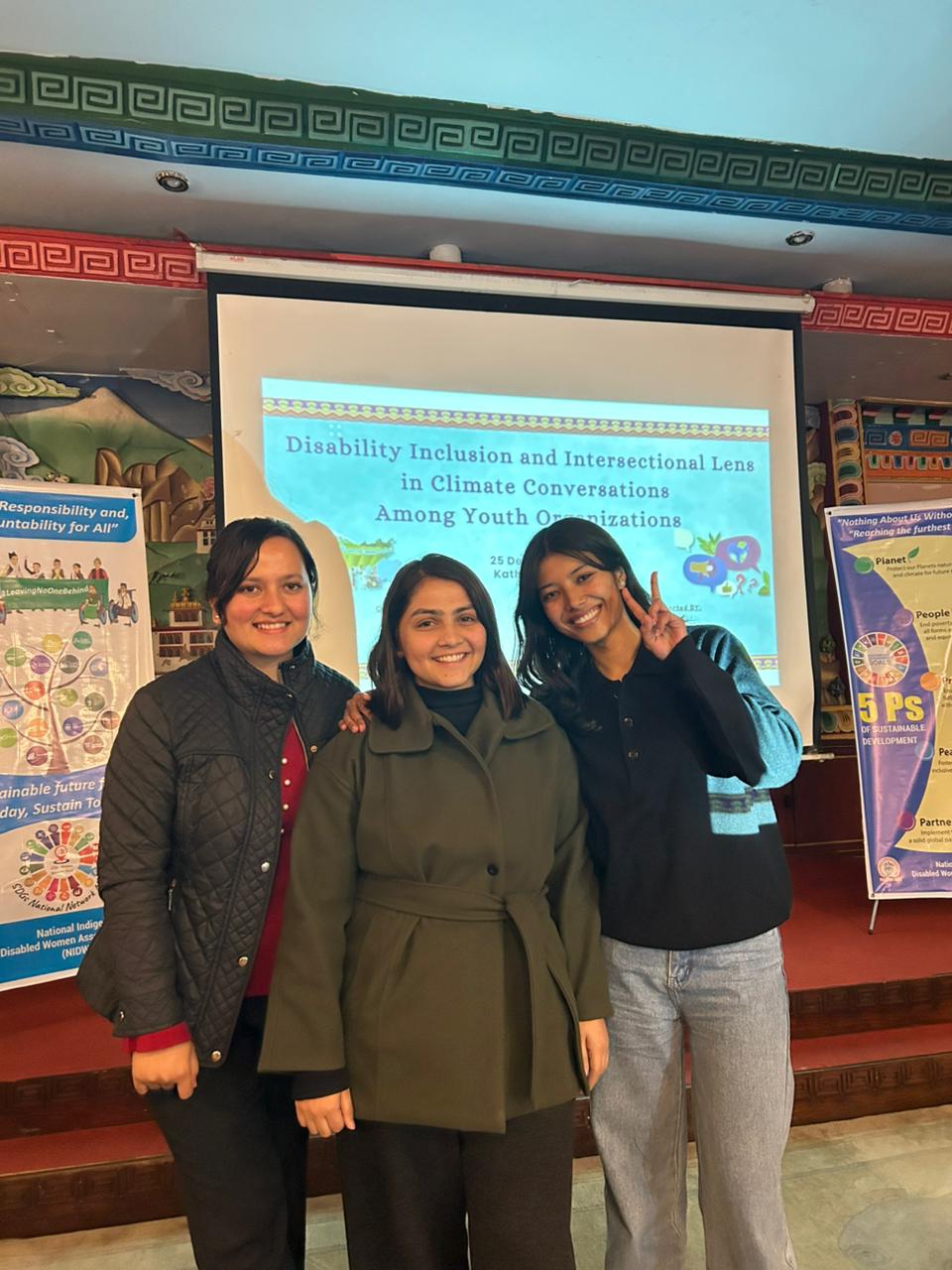
As a youth participant, the discussion deeply challenged me. It made me ask an uncomfortable but necessary question: “Are we truly giving space to the voices of those most affected, or are we only including their names without listening to their real experiences?”
People who live these challenges every day often hold the most practical solutions. The presentations by the NIDWAN team also helped us realize how disability issues are often automatically ignored when climate programs, projects, or even legal frameworks are designed and implemented. The discussions made us more aware and responsible as climate advocates. Through group work, participants developed shared strategies and collaboration plans for inclusive and intersectional climate advocacy in 2026. These included practical ideas such as using Web Content Accessibility Guidelines (WCAG) while developing websites, sharing climate information in formats accessible to persons with disabilities, making indigenous language friendly information, creating safe and comfortable spaces for participation, ensuring lived experiences are heard, and advocating for disability-inclusive climate funding.
The event concluded with a message that strongly stayed with everyone: “Nothing about us, without us”. This reminder will continue to guide our climate advocacy work, ensuring that inclusion is not symbolic, but meaningful, respectful, and led by those most affected.